 Listicle
Bathroom Vanity Materials Ranked: What Lasts Longest
Quick Summary
Quartz and porcelain generally last longest among common bathroom vanity materials, because they resist stains and scratches and need no sealing. Marble, travertine, limestone and onyx are softer and more porous, so they demand the most routine care.
- Quartz is an engineered stone with high stain resistance and needs no sealing; wipe with mild soap.
- Granite and quartzite are very hard natural stones but should be sealed periodically, usually once a year.
- Marble is calcium-based and can be etched by vinegar, citrus cleaners and shampoos.
- Solid surface can be sanded and buffed to remove light scratches and seamed invisibly.
- Pair a durable top with a moisture-resistant cabinet, since humidity affects the cabinet box.
Table of Contents
- How We Ranked These Bathroom Vanity Materials for Durability
- Quick Comparison: Durability, Maintenance, and Cost at a Glance
- Quartz Bathroom Countertops: Low Maintenance and Stain Resistant
- Granite and Quartzite: Hard Natural Stone That Needs Sealing
- Porcelain and Solid Surface: Scratch-Resistant Options Worth Comparing
- Marble, Travertine, Limestone, and Onyx: Beautiful but Softer Stones
- Vanity Top Versus Cabinet Material: Choosing Both for Durability
- Choosing the Right Vanity Material for Your Bathroom and Budget
- Frequently Asked Questions
How We Ranked These Bathroom Vanity Materials for Durability
Last Updated: November 8, 2026
Choosing a bathroom vanity material is one of the more expensive decisions a homeowner makes, and most of the advice online comes from retailers selling one material over another. At My Kitchen Design EXPO, we look at bathroom vanity materials for durability by considering how they hold up to water, cleaning products, daily wear and the occasional dropped razor. The short answer is that quartz and porcelain tend to outlast most natural stones in a busy bathroom, while marble and travertine need the most attention.
Bathroom vanity materials for durability fall into two groups: the countertop surface, which takes the daily abuse, and the cabinet box underneath, which deals with humidity. This guide focuses mainly on the top, because that is where most damage happens.
Cost is best covered by requesting a quote, because prices vary widely by region, fabricator and slab selection.
Quick Comparison: Durability, Maintenance, and Cost at a Glance
Use this table to compare the main bathroom vanity materials for durability before reading the detail sections.
| Material | Scratch Resistance | Stain Resistance | Maintenance | Sealing Needed? | Repairability |
|---|---|---|---|---|---|
| Quartz | High | High | Low | No | Limited |
| Granite | High | Moderate | Moderate | Yes | Moderate |
| Quartzite | Very high | Moderate | Moderate | Yes | Moderate |
| Porcelain | Very high | High | Low | No | Limited |
| Solid surface | Moderate | Moderate | Low | No | Good |
| Marble | Low to moderate | Low | High | Yes | Good |
Ratings are relative comparisons drawn from the supplied research, not lab measurements.
Quartz Bathroom Countertops: Low Maintenance and Stain Resistant
Quartz is an engineered stone, typically a mix of crushed quartz and resin. It is one of the most common choices for bathroom vanity materials for durability because it resists stains and does not need sealing. A quick wipe with mild soap usually handles most spills.
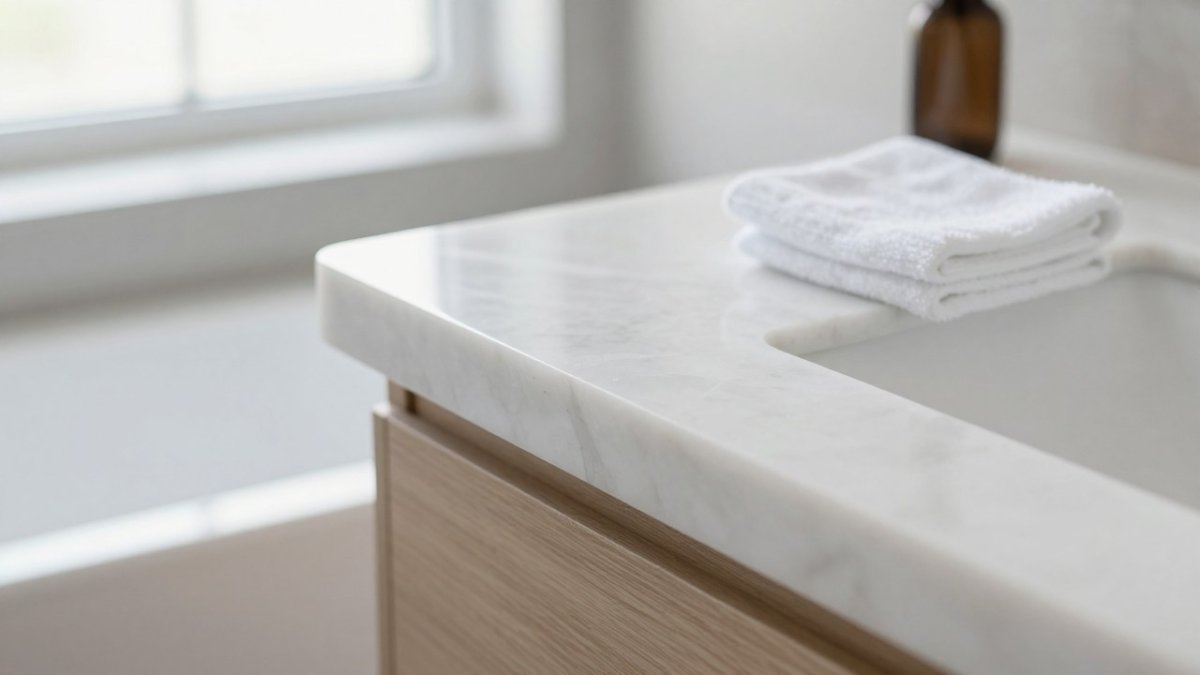
Quartz works well in a primary bathroom where morning routines bring toothpaste, cosmetics and hair products onto the surface every day. Its main limitation is heat: very hot styling tools or curling irons can damage the resin, so use a trivet or pad.
Repairs are harder than with solid surface. Deep chips usually mean replacing the top. Since quartz is so widely used, it is worth asking whether your current bathroom vanity materials for durability guide suggests a specific fabricator for your slab choice.
Granite and Quartzite: Hard Natural Stone That Needs Sealing
Granite and quartzite are both hard natural stones. Quartzite, in particular, is among the most scratch-resistant options available. Both can handle standing water and daily use well, which makes them strong contenders among bathroom vanity materials for durability.
The trade-off is sealing. Granite is porous enough that it should be sealed periodically, usually once a year, to prevent staining from oils, makeup and cleaning products. Skip this step and a dark stain can set in around the faucet or soap dish. Sealing is a recurring task that quartz does not require.
Quartzite and granite can also crack along natural veins if a heavy object lands on an edge, so protect corners in a busy household.
Porcelain and Solid Surface: Scratch-Resistant Options Worth Comparing
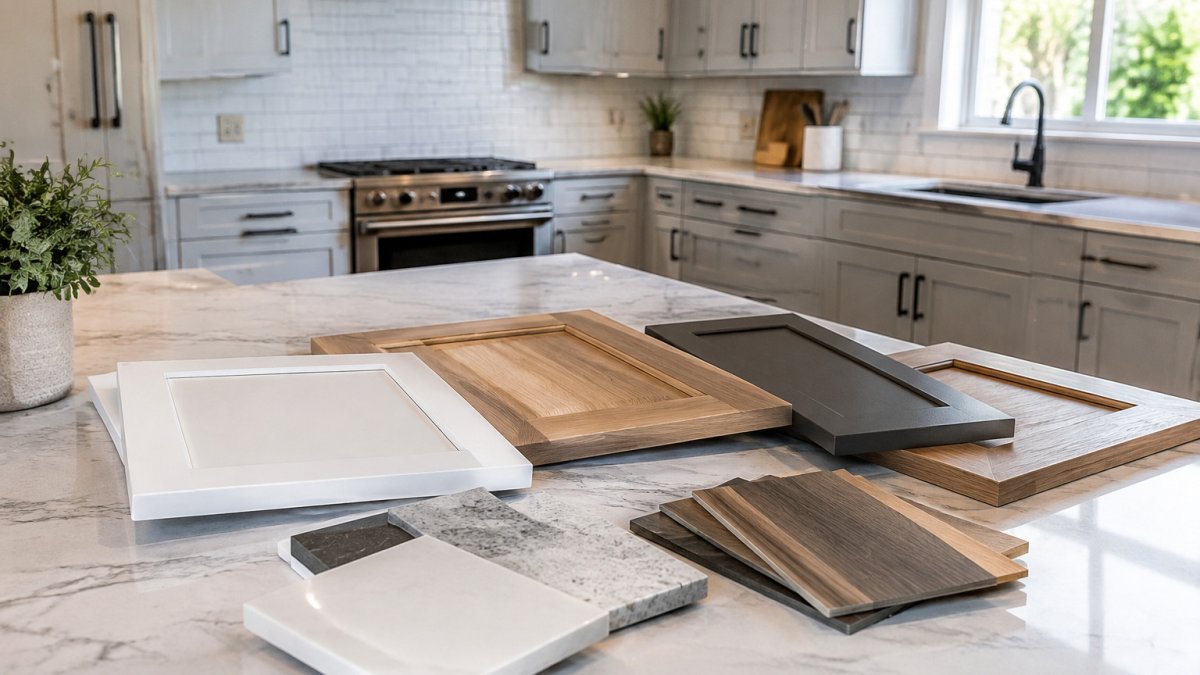
Porcelain vanity tops are hard, scratch-resistant and generally low maintenance. They handle moisture and most household cleaners well, and they do not need sealing.
Solid surface, usually an acrylic or polyester composite, is a different category. It is less scratch-resistant than porcelain, but it can be sanded and buffed to remove light scratches and it can be seamed invisibly. That makes solid surface one of the more repairable options on this list.
Marble, Travertine, Limestone, and Onyx: Beautiful but Softer Stones
Marble, travertine, limestone and onyx offer a look that engineered materials struggle to copy. They are also softer and more porous than the stones above, which makes them the weakest performers on bathroom vanity materials for durability. The four are not interchangeable, though, and the differences matter when you are choosing a top for a busy bathroom.
Marble is calcium-based, which means it reacts with acid. Vinegar, citrus cleaners, some shampoos and even a spilled glass of orange juice can etch the surface, leaving a dull ring that is not a stain and will not wipe away. Etching is a chemical change in the stone, not a residue, so it requires mechanical refinishing rather than cleaning. Marble also stains from oils and cosmetics because it is porous. Sealing marble bathroom tops is a recurring maintenance task, and the right interval depends on the specific stone and use.
Travertine is a form of limestone with natural voids and channels. Those voids trap water and soap scum, and if they are not filled at fabrication, they become places where stains set in. Travertine is softer than granite and quartzite, so it scratches more easily, and it is acid-sensitive in the same way marble is.
Limestone is similarly porous and acid-sensitive, and it is softer than travertine in many varieties. It takes sealing well but demands it more often in a bathroom because humidity keeps the pores open. A honed limestone top in a guest bath is manageable; the same top in a family bathroom used by children is a maintenance commitment.
Onyx is the most fragile of the group. It is translucent and dramatic, but it is soft, brittle and prone to chipping at edges and cutouts. A heavy dropped object near the sink cutout can crack onyx in a way that quartz or porcelain would shrug off.
Repairability is the one area where these stones beat engineered surfaces. That is rarely possible with quartz or porcelain, where a deep chip usually means replacing the top. The trade-off is that refinishing is a recurring cost, not a one-time fix, and it is not a do-it-yourself job on a polished surface.
Watch out: sealing frequency is not a suggestion. A marble or travertine top that goes unsealed for a year in a humid bathroom can develop stains around the faucet base and soap dish that penetrate too deep to remove by cleaning alone. If you love the look of these stones, plan on routine care and accept that a few visible marks are part of the material's character. If that maintenance cadence does not fit your household, choose quartz or porcelain instead.
Vanity Top Versus Cabinet Material: Choosing Both for Durability
Many guides mix up the top and the cabinet. The countertop surface faces scratches, stains and impact. The cabinet box faces constant humidity from showers and sinks. Both matter when you are comparing bathroom vanity materials for durability.
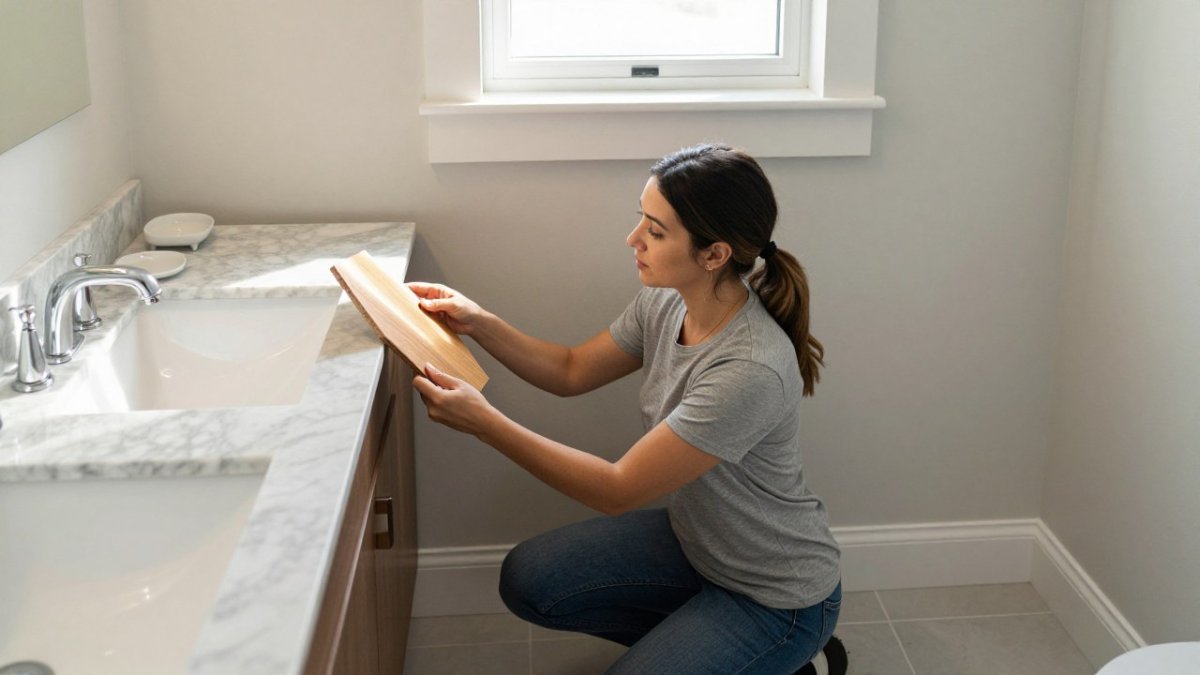
For cabinets, plywood with a moisture-resistant finish generally outlasts particleboard in bathrooms, and solid wood is durable when properly sealed but costs more. Painted or laminate finishes can peel near water. Check whether the drawer boxes and hinges are rated for humidity, since failed hardware is a common complaint.
Pair a durable top with a moisture-resistant cabinet. A premium quartz top on a particleboard box that swells after two years is a poor outcome.
Choosing the Right Vanity Material for Your Bathroom and Budget
The right vanity material depends less on which surface ranks highest and more on who uses the bathroom, how often it gets wet, and how much upkeep you will actually do. A consistent pattern across the materials above is that the top three durability performers (quartz, porcelain and quartzite) are not the three easiest to repair, and the most repairable options (solid surface and the softer stones) demand more routine care. Match the material to the household first, then to the budget.
Busy family bathroom. Quartz or porcelain is usually the best balance of durability and low maintenance. Both resist stains and do not need sealing, which matters when children leave toothpaste, hair products and water on the surface daily.
Guest bath or powder room. A natural stone such as granite or quartzite may be the better choice when looks matter most, provided you commit to sealing it. In a low-traffic room, the sealing interval can stretch, and the stone's appearance carries more weight than its scratch resistance.
Rental or investment property. Solid surface is often the practical pick. It is less scratch-resistant than porcelain, but it can be sanded and buffed to remove light scratches and seamed invisibly. A tenant is unlikely to seal granite on schedule; a landlord is unlikely to want to refinish marble.
Accessible or aging-in-place design. Quartz is a strong alternative if the edge is eased and the sink is undermounted with a sealed rim.
Luxury look on a maintenance budget. If you want the appearance of marble or travertine without the full-top upkeep, consider a protected accent area, such as a marble backsplash or a decorative inset, paired with a quartz or porcelain working surface. You get the visual without exposing the whole top to acid and standing water.
Lifecycle cost, not just sticker price. Pricing depends on factors such as slab, size and local labor, so request a written quote from My Kitchen Design EXPO for current pricing. Over the life of the vanity, the low-maintenance materials (quartz, porcelain, solid surface) avoid recurring sealing costs, while natural stone owners should budget for sealer and occasional professional refinishing. Repairability changes the math too: a solid surface top that can be buffed and patched may outlast a quartz top that has to be replaced after a single deep chip. Price the replacement scenario, not only the purchase.
At My Kitchen Design EXPO, we help homeowners visualize their bathroom projects using 3D visualization before anything is built. Contact us to schedule an appointment and talk through your options.
Frequently Asked Questions
What is the most durable material for a bathroom vanity?
Quartz and porcelain are among the most durable options in the research, both described as hard and scratch-resistant. Quartzite is also identified as one of the hardest natural-stone surfaces. Durability depends on more than hardness, though. Stain resistance, sealing needs, and how the top is installed all affect how well a surface holds up over years of daily use in a bathroom.
Which bathroom vanity lasts the longest?
Lifespan depends on both the countertop and the cabinet. Quartz and porcelain tops resist scratches and stains well and need little upkeep. Granite and quartzite are hard but must be sealed to resist moisture and staining. Cabinet construction matters as much as the top, so check how the box and doors are built before deciding.
Is quartz a good choice for a bathroom vanity top?
Quartz is often recommended for bathroom vanity tops because the supplied research describes it as durable, low-maintenance, and stain-resistant. It does not need the regular sealing that natural stone requires. Its price is not verified in the research, so compare quotes for your specific selection and installation before deciding.
Which bathroom countertop material is easiest to maintain?
Quartz is generally described as the lowest-maintenance option among those compared, since it resists staining and does not require sealing. Natural stones such as granite, marble, and travertine need periodic sealing. Ask your supplier for specific care instructions for any material you are considering.