 Listicle
7 Affordable Alternatives to Custom Kitchen Cabinets
Last Updated: November 22, 2026
Quick Summary
The most affordable alternatives to custom kitchen cabinets are stock cabinets, ready-to-assemble (RTA) cabinets, semi-custom cabinets, cabinet refacing, discount-store cabinets, IKEA-style flat-pack systems, and salvaged or secondhand cabinets. Each trades some design freedom or build quality for a lower price and shorter timeline.
- Stock cabinets are prebuilt in standard sizes, often lowest cost with quicker shipping.
- RTA cabinets arrive flat-packed and assemble with basic tools, but assembly takes time.
- Cabinet refacing keeps existing boxes and replaces doors, drawer fronts, and veneer.
- Installed cost includes delivery, assembly, demolition, installation labor, and finishing, not just the cabinet price.
- Choose by layout first: unusual angles may need semi-custom or custom to avoid wasted space.
Table of Contents
- What Are the Most Affordable Alternatives to Custom Kitchen Cabinets?
- Comparison Table: Stock, RTA, Semi-Custom, Refacing, and Custom Cabinets at a Glance
- Stock Kitchen Cabinets: The Fastest, Lowest-Cost Route
- RTA Cabinets and IKEA Kitchen Cabinets: Flat-Pack Savings and Their Trade-Offs
- Cabinet Refacing: Keeping Your Existing Boxes
- Installed Cost, Durability, and Warranty: What the Price Tag Leaves Out
- Choosing the Right Alternative by Kitchen Layout and Budget
- Get Your Kitchen Designed in 3D Before You Commit to a Budget Option
- Frequently Asked Questions
What Are the Most Affordable Alternatives to Custom Kitchen Cabinets?
Common alternatives to custom kitchen cabinets include stock cabinets, ready-to-assemble (RTA) cabinets, semi-custom cabinets, cabinet refacing, discount-store cabinets, IKEA-style flat-pack systems, and salvaged or secondhand cabinets. Each one trades some design freedom or build quality for a lower price and a shorter timeline. My Kitchen Design EXPO, a family-owned business serving Central Florida since 2009, can help homeowners weigh these options against their budget and layout.
Custom cabinets are built to your exact dimensions, materials, and finish. That level of control generally costs more than standard options. Many homeowners find that a well-chosen alternative covers most of what they need at a fraction of the price. The right choice depends on your layout, how long you plan to stay, and how much design flexibility you actually use.
Some of the options below are cheap at the sticker price but expensive once installation is added. Others cost more upfront and last longer. We walk through both sides so you can compare the full picture.
Comparison Table: Stock, RTA, Semi-Custom, Refacing, and Custom Cabinets at a Glance
Use this table as a starting point. Pricing depends on quantity, dates, and delivery, so request a current quote from My Kitchen Design EXPO on the website.
| Option | Relative Cost | Typical Lead Time | Design Flexibility | Best For |
|---|---|---|---|---|
| Stock cabinets | Lowest | Fast, often ships quickly | Limited to standard sizes | Simple layouts, tight budgets |
| RTA cabinets | Low | Fast, self-assembled | Limited, but some styles | DIY-minded budget projects |
| Semi-custom | Mid-range | Moderate | More sizes and finishes | Balanced cost and choice |
| Cabinet refacing | Low to mid | Moderate | Keeps existing layout | Sound boxes, dated doors |
| Custom | Highest | Longest | Full control | Unusual spaces, premium finishes |
Stock Kitchen Cabinets: The Fastest, Lowest-Cost Route
Stock cabinets are prebuilt in standard widths, depths, and heights. Because they are prebuilt in standard sizes, they are often a lower-cost option, and shipping timelines can be quicker than for custom work. The trade-off is fit: standard sizes rarely match an oddly shaped kitchen perfectly, so you plan around fillers, trim, and layout rather than expecting the boxes to land on the wall exactly where you want them.
Stock cabinets work best in kitchens with straight walls and standard appliance sizes. They are less forgiving in older homes where walls are rarely square, and they offer the least design flexibility of any option on this list.
A step-by-step measuring and ordering checklist
Most costly stock-cabinet mistakes happen before the order is placed, not during installation. Work through this sequence:
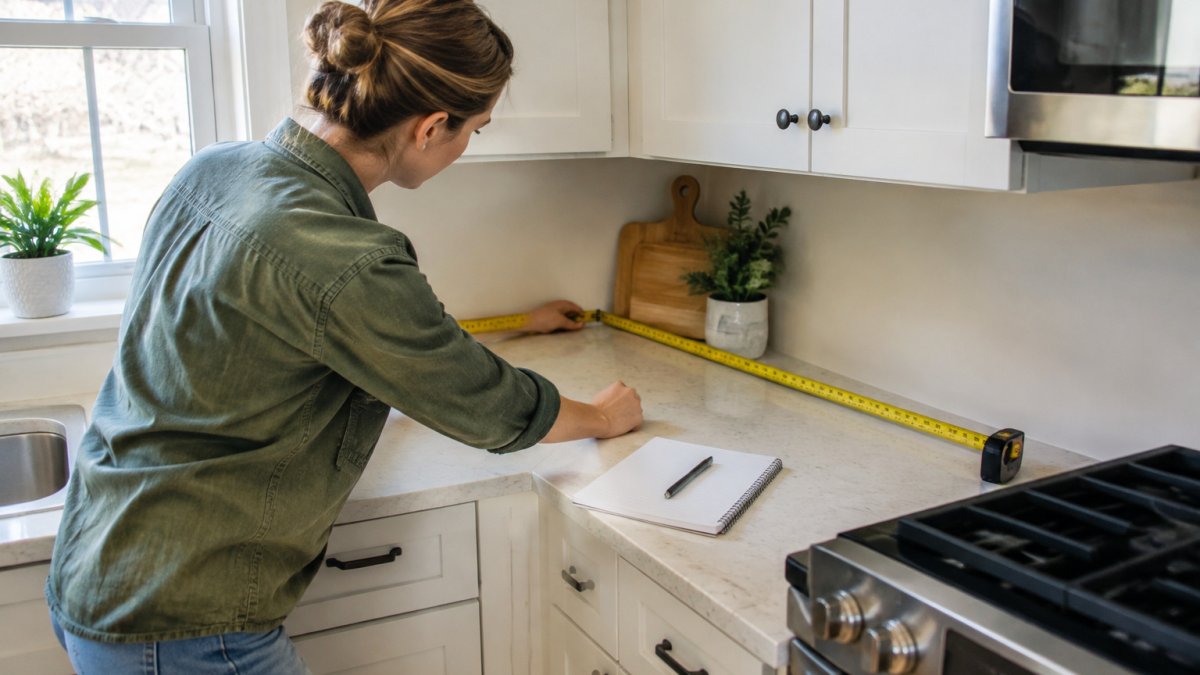
- Measure each wall at three heights. Record the width at the floor, counter height, and ceiling line. Older walls often bow, and the smallest number is the one that governs the layout.
- Check for out-of-square corners. Measure the diagonals of each corner. If they differ by more than a small amount, plan for scribe molding or a filler to close the gap.
- Map appliance clearances. Confirm the refrigerator opening, range cutout, dishwasher bay, and sink base against the manufacturer's specification sheet, not against the old cabinet. Appliance sizes change between models.
- Account for fillers and end panels. Fillers close gaps at walls and between runs; end panels finish exposed sides. Both are separate line items on most stock orders and are easy to forget.
- Confirm door and drawer clearance. Check that doors will not hit the refrigerator, range hood, or adjacent walls when opened, and that drawers clear the countertop overhang.
- Verify ceiling height and soffits. Standard wall cabinets assume a typical ceiling height. If you have a soffit or an uneven ceiling, plan for shorter uppers or a filler above.
- Order a sample door and check the finish. Finish lots can vary, and a sample lets you confirm the color before the full order ships.
- Keep the order confirmation and measure twice against it. Compare the confirmed SKU list to your wall map before the order is released.
Watch out: ordering stock units without accounting for the gaps they leave behind is the most common and most expensive mistake in this category, because fillers and trim ordered later may not match the original finish lot.
Stock cabinets suit homeowners who want the lowest upfront price and a fast timeline and who are willing to design within standard sizes. If your layout has unusual angles, peninsulas, or nonstandard appliance openings, price semi-custom or custom before you commit, because the modification cost on stock can erase the savings.
RTA Cabinets and IKEA Kitchen Cabinets: Flat-Pack Savings and Their Trade-Offs
Ready-to-assemble (RTA) cabinets arrive flat-packed and go together with basic tools. IKEA-style systems fall into this category and are among the most widely recognized budget options. Buyers often pair the cabinet boxes with fronts from a separate supplier to get a more customized look.
The savings can be real, but assembly takes time and patience. Check whether the boxes use a sturdy construction method and whether the hardware is included. Read the warranty carefully, since coverage for particleboard components is often shorter than for plywood. If you plan to hire installers, factor their labor into the total before you compare prices.
RTA cabinets suit homeowners who are comfortable with a few hours of assembly per cabinet and who want to control costs directly.
Cabinet Refacing: Keeping Your Existing Boxes
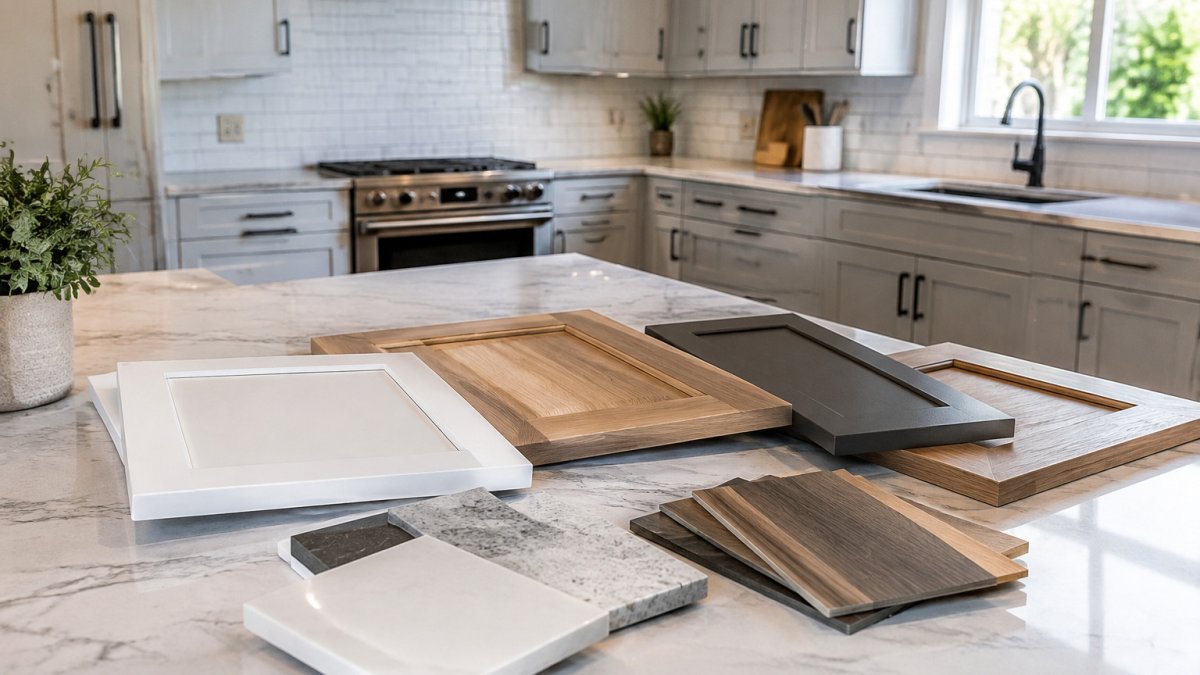
Refacing keeps your current cabinet boxes and replaces the doors, drawer fronts, and veneer. It is one of the most cost-effective ways to update a kitchen that is structurally sound but visually dated. Because the layout stays the same, you avoid demolition and the rework that often comes with a full replacement.
Refacing works best when the existing boxes are solid, square, and free of water damage. Check the inside of cabinets under the sink and near the dishwasher, where leaks often hide. If the boxes are warped or the layout no longer works for how you cook, refacing will not solve those problems.
Ask any refacing provider whether they replace drawer boxes and hardware or only the faces. The scope affects both the final look and the price.
Installed Cost, Durability, and Warranty: What the Price Tag Leaves Out
The cabinet price is only one line in the budget. A full installed-cost comparison adds delivery, assembly, hardware, demolition, disposal, finishing, and labor, and those lines can swing the total by more than the cabinet choice itself. Installation and related trades can represent a meaningful share of the total, so a low-cost cabinet that needs extensive modification may end up costing more than a mid-range option that fits cleanly.
Build the estimate in layers rather than comparing sticker prices:
- Cabinet purchase price. Stock and RTA units are priced per box and per front; semi-custom and custom are quoted per project. Ask whether the quote includes toe kick, fillers, end panels, and crown.
- Delivery and freight. Flat-pack and stock shipments often arrive by freight carrier. Confirm curbside versus inside delivery, liftgate availability, and who pays for a damaged shipment.
- Assembly. RTA assembly is either your time or a paid line item. Get the assembly rate in writing if you are not building the boxes yourself.
- Demolition and disposal. Removing old cabinets, hauling them away, and patching drywall are separate from installation on most quotes.
- Installation labor. Hanging boxes, leveling, shimming, scribing to walls, and setting fillers take longer in older homes where walls are out of square.
- Countertop, plumbing, and electrical. New cabinet heights and depths can force countertop refitting, sink and disposal reconnection, and outlet or under-cabinet lighting adjustments.
- Finishing and trim. Paint, stain, touch-up, and trim work are frequently excluded from cabinet quotes.
Durability follows construction, not price alone. Plywood boxes generally resist moisture better than particleboard, especially under the sink and beside the dishwasher. Drawer boxes with dovetail joints and full-extension slides tend to outlast stapled or stapled-and-glued versions. Hinges matter too: a clip-on concealed hinge with a steel plate holds adjustment better than a basic butt hinge. Ask what the box, drawer, and hinge materials are before you compare two quotes that look similar on paper.
Warranties vary more than most buyers expect. Some manufacturers cover defects for a set number of years, while others exclude water damage, normal wear, and improper installation. Read three things closely: the length of coverage on the box versus the door and finish, whether coverage transfers if you sell the home, and how replacement parts are ordered.
For a detailed look at how material choices affect longevity, see our guide to plywood vs particle board for kitchen cabinets. If you are weighing lifetime value, our overview of how long custom kitchen cabinets last explains what to expect. Budgeting for installation? Our custom kitchen cabinetry installation cost guide breaks down the labor side.
Choosing the Right Alternative by Kitchen Layout and Budget
Start with your layout. A galley kitchen with parallel walls can use stock or RTA cabinets with minimal modification. An L-shaped or U-shaped kitchen with corners, peninsulas, or unusual angles may need semi-custom or custom work to avoid wasted space.
Next, consider how long you plan to stay in the home. If you are selling within a few years, a budget-friendly refresh may deliver the best return. If you are staying long term, spending more on durable construction often pays off.
Measure carefully before you choose. How to measure kitchen cabinets for a renovation walks through the steps. Accurate measurements prevent costly ordering mistakes whichever route you take.
Get Your Kitchen Designed in 3D Before You Commit to a Budget Option
Choosing between alternatives is easier when you can see the result first. At My Kitchen Design EXPO, we offer 3D virtual design visualization so you can preview layouts and finishes before work begins. We provide one-stop design and turn-key construction, so you do not have to coordinate separate providers yourself.
Pricing depends on project scope, materials, and timing, so request a custom quote from My Kitchen Design EXPO. Click and make your "IN-STORE" appointment today to start planning your kitchen.
Frequently Asked Questions
What are some cheap alternatives to kitchen cabinets?
The most common lower-cost options are stock cabinets, which come prebuilt in standard sizes and typically ship quickly; ready-to-assemble (RTA) cabinets, which arrive flat-packed for you or a contractor to assemble; semi-custom cabinets, which offer more sizing flexibility at a lower price than fully custom work; and cabinet refacing, which keeps your existing boxes and replaces only the doors, drawer fronts, and hardware. Pricing varies widely by brand, size, and finish, so compare written quotes that show what is included, such as installation, fillers, trim, and hardware.
Are IKEA kitchen cabinets a good alternative to custom kitchen cabinets?
IKEA kitchen cabinets, such as the SEKTION system, are one flat-pack option readers often consider when comparing budgets. Confirm what is included, check the construction and warranty details, and plan for assembly time or professional installation before you commit.
Are ready-to-assemble cabinets cheaper than custom cabinets?
RTA cabinets are shipped in pieces and assembled on site, which changes the labor and shipping profile compared with custom work. The trade-off is time and skill: you or your installer must assemble and level every unit, and options for sizes and finishes are narrower than custom work. Ask whether assembly is included in any quote and whether replacement parts are available from the manufacturer.
Can you update kitchen cabinets without replacing them?
Yes. Cabinet refacing replaces doors, drawer fronts, and veneers while keeping the existing cabinet boxes, which can significantly lower the cost of a kitchen update when the boxes are sound. Painting or new hardware is an even lower-cost option for a fresh look. Refacing works best when the cabinet frames are straight, solid, and in the layout you want to keep.