 How-to
How Long Do Custom Kitchen Cabinets Last?
Last Updated: November 19, 2026
Quick Summary
Custom kitchen cabinets can last 30 to 50 years or more when they are built well and cared for properly. Lifespan depends on materials, construction quality, moisture exposure, and daily use. Solid wood and plywood boxes generally outlast particle board.
- Solid wood and plywood boxes are the most durable materials for custom cabinets.
- Particle board swells and weakens when it gets wet, so it is the least durable choice.
- Run the exhaust fan during cooking and dishwashing to reduce humidity.
- Hinges often need replacement within 15 to 20 years, and soft-close hinges may fail earlier.
- Check hinge and slide condition before assuming the cabinets need full replacement.
Table of Contents
- How Long Custom Kitchen Cabinets Typically Last
- What Type of Cabinets Last the Longest
- Factors That Affect Cabinet Lifespan
- Painted Cabinet Lifespan Compared to Stained Finishes
- How to Make Kitchen Cabinets Last Longer
- Signs Kitchen Cabinets Need Replacing
- Booking Your Cabinet Assessment With My Kitchen Design EXPO
- Frequently Asked Questions
How Long Custom Kitchen Cabinets Typically Last
Custom kitchen cabinets can last 30 to 50 years or more when they are built well and cared for properly. At My Kitchen Design EXPO, we help Central Florida homeowners plan kitchens that hold up over time. The real answer depends on materials, construction, moisture, and daily use.
Good custom cabinetry is a long-term investment in your home.
A cabinet's lifespan is not one fixed number. Think of it as a range shaped by how the cabinet is built and how it is used. Heavy use, steam, and spills all wear finishes faster than light, careful use does.
- Well-built boxes and solid hardware often last decades
- Poor construction can show problems within a few years
- Daily wear affects doors, drawers, and hinges first
What Type of Cabinets Last the Longest
Cabinets with solid wood frames and well-joined boxes tend to last the longest. See a dedicated ranking of durable cabinet materials for more detail. Plywood boxes are also a strong choice. The cabinet box matters more than the door style for long-term durability.
Solid Wood Versus Plywood Boxes
Solid wood is strong and handles changes in humidity well when it is properly finished. Plywood is layered wood that resists warping and holds screws firmly. You can compare the two in detail in plywood vs particle board for kitchen cabinets.
Particle board and MDF are less durable. They can swell or sag if they get wet. For a cabinet that needs to last, check how the box is built before you check the door style.
Pros and Cons of Common Custom Cabinet Materials
Each material has trade-offs. Choose based on how you use your kitchen and how much moisture it sees.
- Solid wood (such as maple or cherry)
- Pros: Strong, refinishes well, and holds up for decades
- Cons: Costs more and can move with humidity changes
- Plywood boxes
- Pros: Stable, resists warping, and holds hardware well
- Cons: Edges need a finish, and quality varies by grade
- MDF doors or panels
- Pros: Smooth surface for paint and lower cost
- Cons: Vulnerable to water damage at edges
- Particle board
- Pros: Low cost
- Cons: Weak under moisture and heavy loads, so it is the least durable choice
Factors That Affect Cabinet Lifespan
Several factors decide how long your cabinets will last. Some you can control, and others come from how the kitchen is used. A cabinet's lifespan depends on a handful of mechanical and environmental variables.
- Moisture and humidity: Steam from the dishwasher, stove, and sink can warp doors and damage finishes. The most common failure point is the cabinet box under the sink, where a slow leak or condensation can swell particle board or MDF within a single season. Running the exhaust fan during cooking and dishwashing cycles reduces ambient humidity and is one of the cheapest ways to extend cabinet life.
- Construction quality: Strong joinery and solid hardware matter more than appearance. Dovetail drawer joints, doweled or confirmat-screwed box joints, and a solid back panel resist racking far better than stapled butt joints. A cabinet that is square and rigid when installed stays square for decades; one that flexes will loosen its hardware over time.
- Materials: Solid wood and quality plywood outlast particle board. Plywood's cross-laminated layers resist warping and hold screws firmly, while particle board swells irreversibly once water reaches its core. MDF is stable in dry conditions but vulnerable at unfinished edges.
- Daily use: Frequently opened doors and drawers wear out hinges and slides first. A busy family kitchen may cycle a drawer slide thousands of times a year, and that is where hardware quality shows up first.
- Installation: Cabinets that are level and properly secured hold up better over time. Shimming and fastening to studs prevents the racking that misaligns doors and stresses hinges. A poorly hung cabinet can develop sagging shelves and rubbing doors within a few years.
- Maintenance: Regular cleaning and prompt repairs prevent small problems from growing. Tightening a loose hinge screw before it enlarges the hole is far cheaper than repairing stripped wood later.
Hardware Failure Timelines
Most articles focus on the wood box, but the hardware is what homeowners actually touch every day, and it fails on a predictable schedule. A common pattern among cabinet installers is:
- Hinges: Standard concealed hinges with daily use often need adjustment within 5 to 10 years and replacement within 15 to 20 years. Soft-close hinges tend to fail earlier at the damping mechanism, sometimes within 7 to 12 years, because the hydraulic or spring damper wears out before the hinge itself.
- Drawer slides: Standard side-mount slides commonly show wear within 8 to 12 years under heavy use; full-extension ball-bearing slides often last 15 to 20 years. Soft-close undermount slides typically need replacement in the 10 to 15 year range when the soft-close feature stops engaging.
- Drawer boxes and glides: Wood-on-wood glides wear faster than metal slides and may need waxing or replacement within 5 to 10 years in a busy kitchen.
- Knobs and pulls: These rarely fail mechanically, but finishes on plated or painted hardware can wear through in 10 to 15 years, prompting replacement for appearance rather than function.
Watch out: Check hinge and slide condition before assuming a cabinet needs full replacement.
The ROI Question: Is Custom Worth It Over 30 Years?
Homeowners often ask whether custom cabinetry justifies its cost over stock options across a 30-year horizon. The honest answer is that the math depends on construction and hardware, not on the label.
Painted Cabinet Lifespan Compared to Stained Finishes
Painted and stained finishes both last a long time when applied well. The difference is in how each one handles wear, and in how easily each can be refreshed. A quality finish is a wear layer, and its lifespan depends on the coating system, the prep work underneath, and the environment it faces.
A painted finish usually needs touch-ups every several years in busy kitchens. Paint can chip or show scratches more easily, especially on edges and around pulls where hands and rings make contact. A quality stained or clear-coated finish can last many years before it needs refinishing, and stain often hides small marks better than paint. However, stain and clear coat can fade with heavy sun exposure, and clear finishes may yellow or dull over time depending on the product.
How Each Finish Fails
- Paint: Fails first at edges, corners, and around hardware where film thickness is thin. Moisture behind the paint film can cause blistering, and repeated cleaning with abrasive pads dulls the sheen. Touch-up is straightforward but color matching older paint can be difficult.
- Stain and clear coat: Fails first as dulling or scratching of the clear layer, then as fading from UV exposure. Once the clear coat wears through, the stain itself can lift with cleaning. Refinishing usually means sanding and recoating, which is more involved than a paint touch-up.
Which Finish Suits Which Kitchen
- High-moisture or busy family kitchens: A quality painted finish with a durable topcoat is easy to touch up and hides fewer sins than stain, but it needs more frequent attention at contact points.
- Sunny kitchens: Stained and clear-coated cabinets may fade faster near windows; consider UV-resistant topcoats or accept that refinishing may come sooner.
- Long-term low-maintenance preference: A well-applied stained finish with a quality clear coat often goes longer between full refinishing cycles, provided the clear coat is maintained.
Watch out: The most common finish failure is not the coating itself but poor prep, sanding, cleaning, and priming before painting or staining determine how long the finish lasts far more than the brand of paint.
How to Make Kitchen Cabinets Last Longer
Good habits and simple care can add years to your cabinets. Start with the basics and keep up with them.
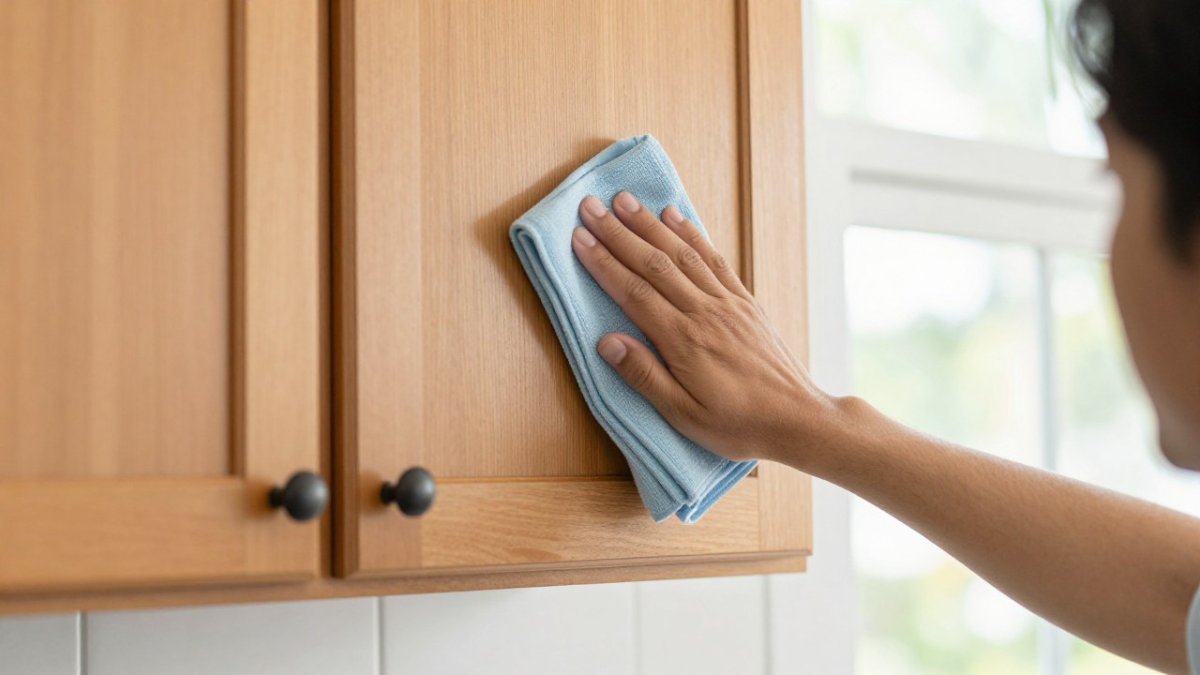
- Wipe spills right away, especially near the sink and stove
- Use a mild soap and a soft cloth, not harsh cleaners
- Run the exhaust fan when cooking or running the dishwasher
- Keep cabinet doors and drawers from being slammed shut
- Tighten loose hardware before it wears out the holes
Maintenance Checklist by Material
Different materials need different care. Use this checklist to match your routine to your cabinets.
- Solid wood: Clean with a damp cloth, dry right away, and refinish when the finish looks worn
- Painted cabinets: Clean gently, avoid abrasive pads, and touch up chips early
- Plywood or MDF edges: Check for swelling or peeling near the sink and dishwasher
- Hinges and drawer slides: Tighten screws each year and lubricate if they feel stiff
- All materials: Check for moisture under the sink and around the dishwasher every few months
Signs Kitchen Cabinets Need Replacing
Some problems can be repaired, but others mean it is time to replace the cabinets. Watch for these warning signs:
- Doors or drawers that sag, warp, or no longer close properly
- Swollen or crumbling boxes, especially under the sink
- Hinges or slides that keep loosening or breaking
- Finishes that peel or bubble across large areas
- Visible mold or a musty smell from inside the cabinets
A professional assessment can help you decide which option makes sense for your kitchen. Before you decide, you can review what a custom cabinet installation costs.
Booking Your Cabinet Assessment With My Kitchen Design EXPO
If you are not sure whether your cabinets can be saved, a professional look can help. book a cabinet assessment at My Kitchen Design EXPO to review your cabinets, materials, and layout. Our team can help you plan a durable kitchen built to last.
Our one-stop shop handles design and construction, so you do not have to coordinate separate contractors. Use our 3D virtual modeling to see your new kitchen before work begins. Click and make your "IN-STORE" appointment today.
Frequently Asked Questions
What wears out first on kitchen cabinets?
Hinges, drawer slides, and cabinet doors usually wear out first, because they absorb daily opening and closing. Soft-close hinges and full-extension drawer slides often fail before the cabinet box itself. Surface finishes near the sink and dishwasher also degrade early from moisture and heat. Replacing hardware or adjusting hinges is typically far cheaper than replacing the whole cabinet run, so inspect these parts first when you notice sticking, sagging, or rattling.
Are custom cabinets more durable than stock cabinets?
Custom cabinets are built to your dimensions. Stock cabinets are mass-produced with more standardized construction, which can be perfectly adequate for many homes. Durability depends heavily on the materials and build quality rather than the label alone, so ask any cabinet maker about box construction, joinery method, and hardware ratings before you decide.
Can painted kitchen cabinets last as long as stained cabinets?
Painted cabinets can last as long as stained ones when they are properly prepared and finished. Paint tends to chip at edges and high-contact areas over time, while stain shows wear differently. Maintenance matters: touch-ups and gentle cleaning extend a painted finish's life considerably. Ask for the finish system and cure time when comparing options.