 Comparison
Is Turn-Key Kitchen Renovation Worth It? 2026
Table of Contents
- What Makes Turn-Key Kitchen Renovation Different
- Turn-Key Kitchen Renovation Cost vs. Traditional Remodeling
- Turn-Key vs. DIY Kitchen Remodel: Convenience and Control Trade-Offs
- Kitchen Renovation Timeline: What to Expect with Turn-Key Service
- Kitchen Remodel Return on Investment: Will You Recoup Your Spending?
- Who Benefits Most from Turn-Key Kitchen Renovation
- The Real Value: Beyond the Numbers
- Frequently Asked Questions
Last Updated: October 11, 2026
What Makes Turn-Key Kitchen Renovation Different
A turn-key kitchen renovation is a fully managed project where one contractor handles design, materials, permits, and construction from start to finish. You don't coordinate separate plumbers, electricians, and cabinet installers. One business owns the entire timeline and outcome.
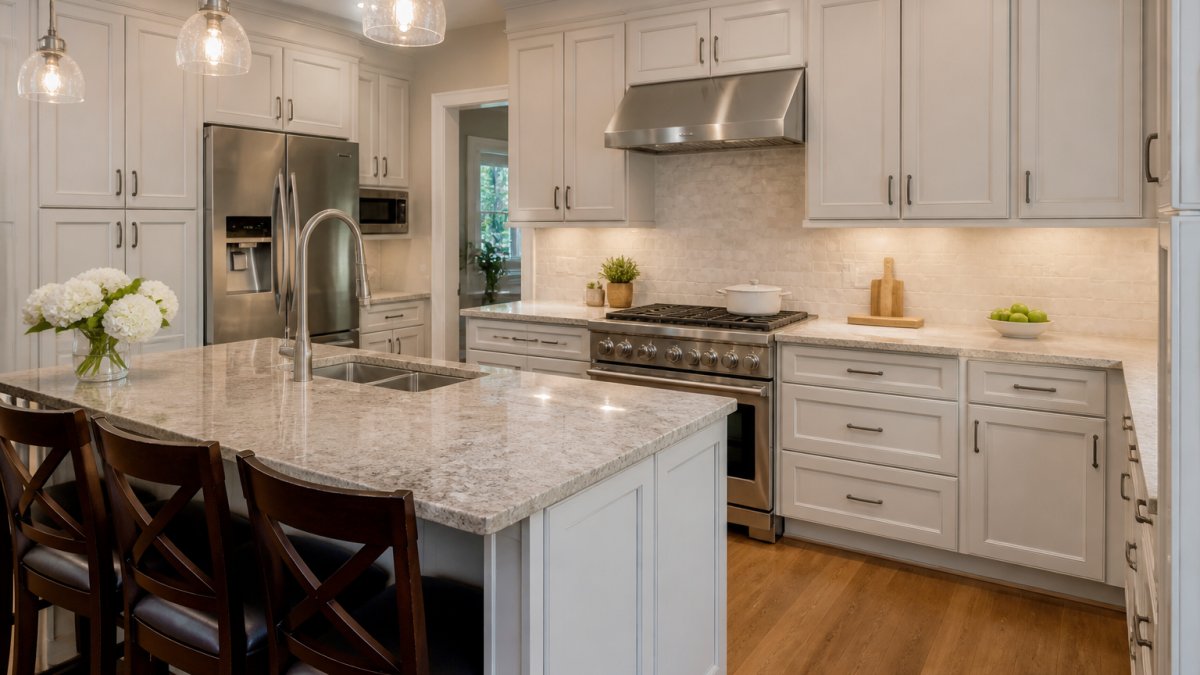
This differs fundamentally from traditional remodeling, where you hire individual trades and manage the workflow yourself. It also differs from DIY approaches, where you handle the work personally. The turn-key model trades flexibility for accountability.
My Kitchen Design EXPO operates as a turn-key renovation provider, handling everything from 3D design visualization through final installation of custom cabinetry, countertops, and finishes. This one-stop approach eliminates the need to shop around for different services.
Turn-Key Kitchen Renovation Cost vs. Traditional Remodeling
The cost structure of a turn-key kitchen renovation differs sharply from hiring contractors separately.
Pricing for kitchen remodels depends heavily on kitchen size, material choices, and complexity.
What Turn-Key Pricing Typically Includes
A turn-key quote should itemize the following components so you can compare apples-to-apples with traditional contractors:
- Design and consultation: 2D or 3D layout, material selection, and design revisions (often 1-3 rounds included)
- Permits and inspections: Application fees, permit acquisition, and scheduling of required inspections
- Demolition and disposal: Removal of existing cabinetry, countertops, and appliances; hauling and disposal fees
- Materials: Cabinetry, countertops, backsplash, flooring, appliances, hardware, and finishes at specified grade levels
- Labor: Installation of all components, including carpentry, plumbing, electrical, and finishing work
- Contingency allowance: Typically 10-15% of the project cost reserved for unforeseen issues (structural damage, code upgrades, material changes)
- Project management: Scheduling, subcontractor coordination, site supervision, and communication
- Warranty: Workmanship warranty (often 1-2 years) and manufacturer warranties on appliances and materials
What Turn-Key Pricing Often Excludes
Read the fine print. Common exclusions include:
- Structural repairs beyond the kitchen scope (foundation, roof, or wall damage discovered during demolition)
- Upgrades to electrical panel or plumbing main lines if code requires them
- Custom design changes after the contract is signed (often charged as change orders)
- Appliance upgrades beyond the allowance specified in the contract
- Flooring outside the kitchen (hallway or adjacent room)
- Painting or drywall repair in other rooms
- Temporary accommodations (rental kitchen, hotel meals during extended delays)
The Premium for Coordination
Turn-key providers often have a different cost structure compared to hiring trades separately. This difference covers project management overhead, warranty liability, and the contractor's profit margin for assuming coordination risk.
In tight labor markets where skilled trades are scarce, turn-key providers often have established relationships and faster access to plumbers, electricians, and cabinet installers.
Allowances and Change Orders
Turn-key contracts often include material allowances, a set dollar amount for countertops, appliances, or cabinetry at a standard grade. If you choose premium materials, you pay the difference.
Change orders are requests to modify the scope after the contract is signed. A turn-key provider should provide a written change-order process that specifies the cost, timeline impact, and approval steps.
Turn-Key vs. DIY Kitchen Remodel: Convenience and Control Trade-Offs
DIY kitchen remodeling gives you maximum control and minimum cost. You choose every material, every finish, every timeline decision. You also absorb all the risk. A mistake in cabinet installation or countertop measurement becomes your problem to fix.
Turn-key renovation flips that equation. You lose granular control over daily decisions but gain peace of mind. The contractor owns the outcome. If the cabinet doors don't align or the granite has a flaw, they fix it at no additional cost.
The convenience factor matters most for homeowners with limited time or construction experience. A full kitchen renovation typically disrupts your home for weeks or months. With DIY, you're managing that disruption yourself.
However, turn-key is not hands-off. You still make decisions about design, colors, materials, and layout. The difference is the contractor executes those decisions professionally rather than you executing them yourself.
Kitchen Renovation Timeline: What to Expect with Turn-Key Service
A typical kitchen renovation timeline spans 4 to 12 weeks depending on scope. A minor refresh with new countertops and appliances might take 4 to 6 weeks. A full remodel with cabinetry replacement, layout changes, and electrical work typically takes 8 to 12 weeks.
Turn-key providers often deliver faster timelines than traditional remodeling because one company controls all trades and materials. There's no lag between the plumber finishing and the electrician arriving. Scheduling conflicts disappear when one entity manages the entire workflow.
The timeline also depends on permit requirements. Some jurisdictions require inspections at multiple phases. A turn-key provider handles permit applications and scheduling inspections, which saves you administrative time but doesn't necessarily speed up the actual regulatory process.
Kitchen Remodel Return on Investment: Will You Recoup Your Spending?
Kitchen remodels can offer a return on investment when you sell your home. The figures vary by market, neighborhood, home value, and how dated your kitchen was before renovation.
The recovery rate matters if you're renovating primarily for resale value. It matters less if you're renovating for personal enjoyment and plan to stay in the home for years.
The financial math also shifts based on market conditions. In a hot real estate market where homes sell quickly, buyers value updated kitchens more. In a slower market, the return on a luxury renovation may be lower because fewer buyers can afford the premium.
According to Orchard's kitchen remodel cost guide, kitchens are among the highest-ROI home improvements, though the specific return depends on project scope and local conditions. The Home Depot's kitchen remodeling cost guide provides side-by-side scope comparisons to help you estimate spending before requesting quotes.
Click and Make your "IN-STORE" appt today! →
Who Benefits Most from Turn-Key Kitchen Renovation
Turn-key renovation makes the most sense for homeowners who value time and certainty over cost minimization. But "most sense" depends on your specific situation. Use this framework to evaluate whether turn-key is the right choice for you.
Turn-Key Is a Strong Fit If:
-
You have limited time to manage the project. If your work schedule doesn't allow for weekly site visits, contractor calls, or dispute resolution, a single point of contact eliminates that burden. Turn-key providers handle scheduling, communication, and problem-solving so you don't have to.
-
You lack construction experience or confidence. Managing separate trades requires knowledge of building codes, material standards, and sequencing. If you're unsure what questions to ask or how to evaluate quality, a turn-key provider's accountability and warranty reduce the risk of costly mistakes.
-
Your project involves complex coordination. If your renovation requires layout changes, electrical upgrades, plumbing relocation, and custom cabinetry, coordinating multiple trades becomes genuinely difficult. One contractor with experience in integrated projects handles that complexity better and reduces the risk of miscommunication between trades.
-
You're selling your home within 1-2 years. A turn-key provider delivers a finished, warrantied kitchen that appeals to buyers. You avoid the risk of incomplete work or warranty disputes lingering after closing. The upfront cost is offset by buyer confidence and faster sale.
-
You want design certainty before construction starts. Turn-key providers typically offer 3D visualization or renderings so you see the finished kitchen before work begins. If you're risk-averse about design decisions, that upfront clarity is worth the premium.
-
You're managing the project remotely. If you live out of state or can't visit the site regularly, a turn-key provider's project management and communication protocols reduce the need for your on-site presence.
Turn-Key Is Less Ideal If:
-
You have a very tight budget and can do some work yourself. The cost structure of turn-key services may be a consideration if you can install backsplash, paint, or handle demolition yourself. Hiring separately and doing selective DIY work can save money.
-
You want maximum control over every decision. Turn-key contracts define scope upfront. Changes mid-project trigger change orders and costs. If you're the type to reconsider finishes halfway through or want to tweak the layout, the rigidity of turn-key will frustrate you.
-
You have time to shop around and manage contractors. If you enjoy the process, have construction knowledge, and can coordinate trades, you'll likely save money and get exactly what you want by hiring separately.
-
Your kitchen is in good structural condition and needs only cosmetic updates. A simple countertop and appliance swap doesn't require complex coordination. Turn-key overhead is wasted on a straightforward project.
-
You plan to stay in your home for 10+ years and don't care about resale value. The financial premium of turn-key matters less if you're keeping the kitchen for decades. You're paying more for convenience, not investment return.
Decision Checklist
Answer these questions to clarify your priority:
- How much time can you dedicate to managing the project? (Less than 5 hours per week → turn-key favored; 10+ hours per week → traditional contracting acceptable)
- How confident are you evaluating contractor quality and building code compliance? (Not confident → turn-key favored; Very confident → traditional contracting acceptable)
- How complex is your project scope? (Layout changes, electrical, plumbing → turn-key favored; Cosmetic updates only → traditional contracting acceptable)
- When do you plan to sell or move? (Within 2 years → turn-key favored; 5+ years or never → personal preference)
- What's your budget flexibility? (Fixed budget, no wiggle room → traditional contracting favored; 10-15% contingency built in → turn-key acceptable)
- How important is design certainty before construction? (Very important → turn-key favored; Willing to adapt mid-project → traditional contracting acceptable)
If three or more of your answers favor turn-key, the model likely fits your situation. If three or more favor traditional contracting, you'll probably save money and stress by hiring separately.
The Real Value: Beyond the Numbers
The financial return on a kitchen renovation is only part of the equation. The real value includes daily quality of life improvements and the peace of mind that comes with a professionally managed project.
A kitchen that functions better, with better lighting, more counter space, and updated appliances, genuinely improves how you cook and entertain. You experience that benefit every day.
Turn-key renovation adds another layer of value: accountability. You have a single point of contact if something goes wrong. You have a warranty on the work.
The choice between turn-key and traditional remodeling ultimately depends on what you value most: cost savings, time savings, control, or peace of mind.
A kitchen renovation is one of the largest home investments you'll make. The right approach depends on your timeline, budget, and how much project management you want to handle yourself.
Frequently Asked Questions
What does a turn-key kitchen renovation include?
A turn-key kitchen renovation typically includes design consultation, custom cabinetry, countertops (granite, quartz, or laminate), appliance installation, plumbing and electrical work, flooring, and finishing touches. The contractor manages all aspects from start to finish, eliminating the need to coordinate multiple vendors. Inclusions vary by provider, so confirm what's covered in your contract before committing.
How much does a turn-key kitchen remodel cost compared to hiring contractors separately?
Turn-key pricing depends on project scope, materials, and labor. Turn-key services may have a different upfront cost due to design expertise and project management. Request a detailed quote to compare against separate bids.
Is a kitchen remodel worth it before selling your home?
Kitchen renovations can offer a return on investment at resale, depending on market conditions and project scope. A well-executed remodel increases home appeal to buyers and can justify a higher listing price. However, overspending on luxury upgrades may not return full investment. Focus on functional improvements and neutral finishes that appeal broadly rather than highly personalized choices.
How long does a turn-key kitchen renovation take?
Most turn-key kitchen renovations take 4-12 weeks, depending on project complexity, material availability, and any unexpected structural issues discovered during work. A single-source contractor can often coordinate faster than managing separate trades independently. Confirm the timeline in your contract and ask about potential delays from permit processing or supply chain issues.