 Comparison
Waterproof Flooring vs Ceramic Tile for Bathrooms
Last Updated: November 24, 2026
Quick Summary
For most bathrooms, waterproof flooring such as luxury vinyl plank handles moisture better than ceramic tile, but only when it is installed correctly over a sealed subfloor. Ceramic tile resists water on its surface, yet grout lines and perimeter joints can let moisture reach the subfloor.
- Ceramic tile grout is porous and needs periodic sealing to resist moisture.
- Ceramic tile carries higher installed costs per square foot than vinyl plank.
- Waterproof flooring over an unsealed subfloor with open perimeter gaps can still fail.
- Matte or textured finishes are generally preferred near tubs and showers for slip resistance.
- Full bathrooms with heavy moisture suit waterproof flooring; guest baths suit tile.
Table of Contents
- Is Waterproof Flooring Better Than Ceramic Tile for a Bathroom?
- Waterproof Flooring vs Ceramic Tile at a Glance
- Water Resistance and Whole-System Waterproofing
- Vinyl Flooring vs Tile Cost: Installed Price and Lifecycle Cost
- Porcelain vs Ceramic Tile for Bathroom Floor
- Vinyl vs Tile Flooring Pros and Cons for Bathrooms
- Slip Resistance, Installation Quality and Long-Term Upkeep
- Choosing Your Bathroom Floor and Booking a Consultation
- Frequently Asked Questions
Is Waterproof Flooring Better Than Ceramic Tile for a Bathroom?
For most bathrooms, waterproof flooring such as luxury vinyl plank (LVP) handles moisture better than ceramic tile, but only when it is installed correctly over a sealed subfloor. Ceramic tile is water-resistant on its surface, yet its grout lines and water absorption can give moisture a path to the subfloor.
The real question is not which material is waterproof in isolation. It is whether the entire floor system keeps water out. For a broader look at quartz as a bathroom surface, see quartz countertop options for bathrooms. A surface that resists water can still fail if the underlayment, seams, edges, or transitions let moisture through. ASTM International standards for flooring water performance
Waterproof Flooring vs Ceramic Tile at a Glance
| Factor | Waterproof Flooring (LVP) | Ceramic Tile |
|---|---|---|
| Water absorption | Very low, surface is non-porous | Higher than porcelain, but glazed surfaces resist well |
| Installed cost | Lower range per square foot | Higher range per square foot |
| Comfort underfoot | Softer, warmer | Hard and cold |
| Slip resistance | Varies by texture | Varies by texture and finish |
| Grout maintenance | None | Grout needs periodic sealing |
| Best fit | Full bathrooms with high moisture | Guest baths and powder rooms |
Pros and cons at a glance:
- Waterproof flooring: Strong moisture performance, comfortable underfoot, lower installed cost. Dependent on a quality installation and product specification.
- Ceramic tile: Durable, wide design range, lighter and easier to cut than porcelain. Absorbs more water and needs grout care.
Water Resistance and Whole-System Waterproofing
A water-resistant surface is not the same thing as a waterproof floor assembly. This is the distinction most buying guides blur, and it is the one that decides whether a bathroom floor survives a tub overflow or a slow supply-line drip. Water reaches the subfloor through the weakest layer in that stack, not through the strongest one.
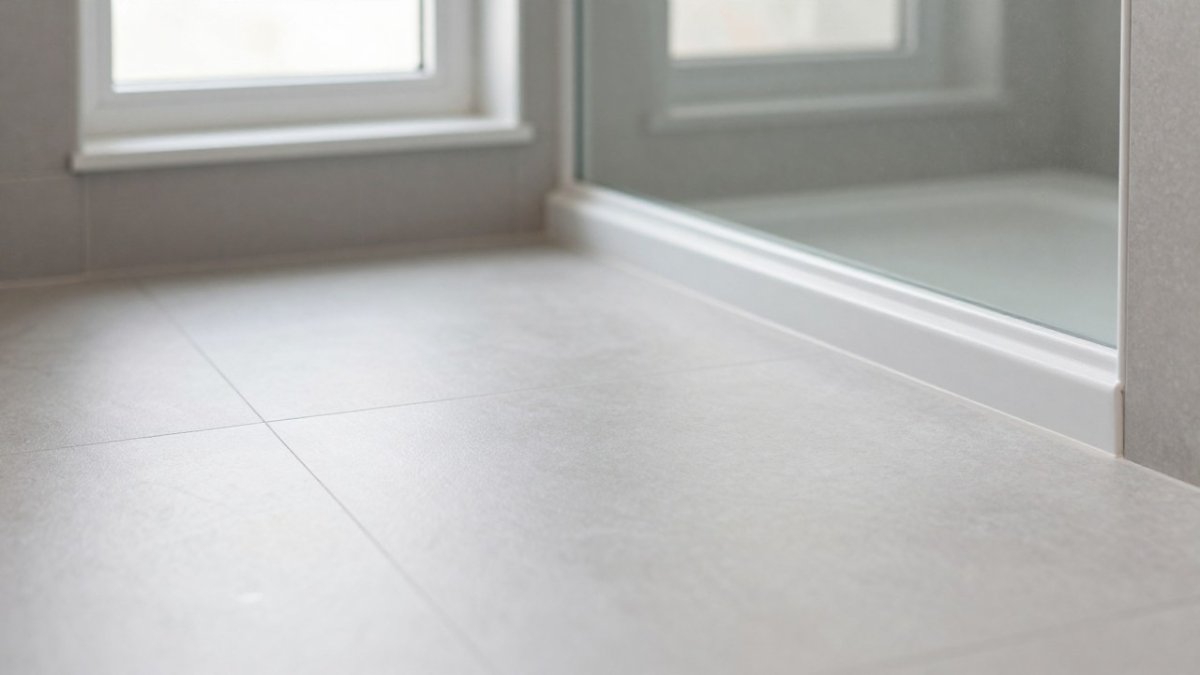
With ceramic tile, the tile itself is dense and glazed surfaces shed water well, but the assembly is interrupted by grout lines and by the joints at the tub, shower curb, toilet flange, and room perimeter. Cementitious grout is porous unless it is sealed, and even sealed grout can crack as the substrate moves or as the framing dries and shrinks. A common pattern is a shower or tub surround that looks fine for years while slow moisture reaches the underlayment behind the tile.
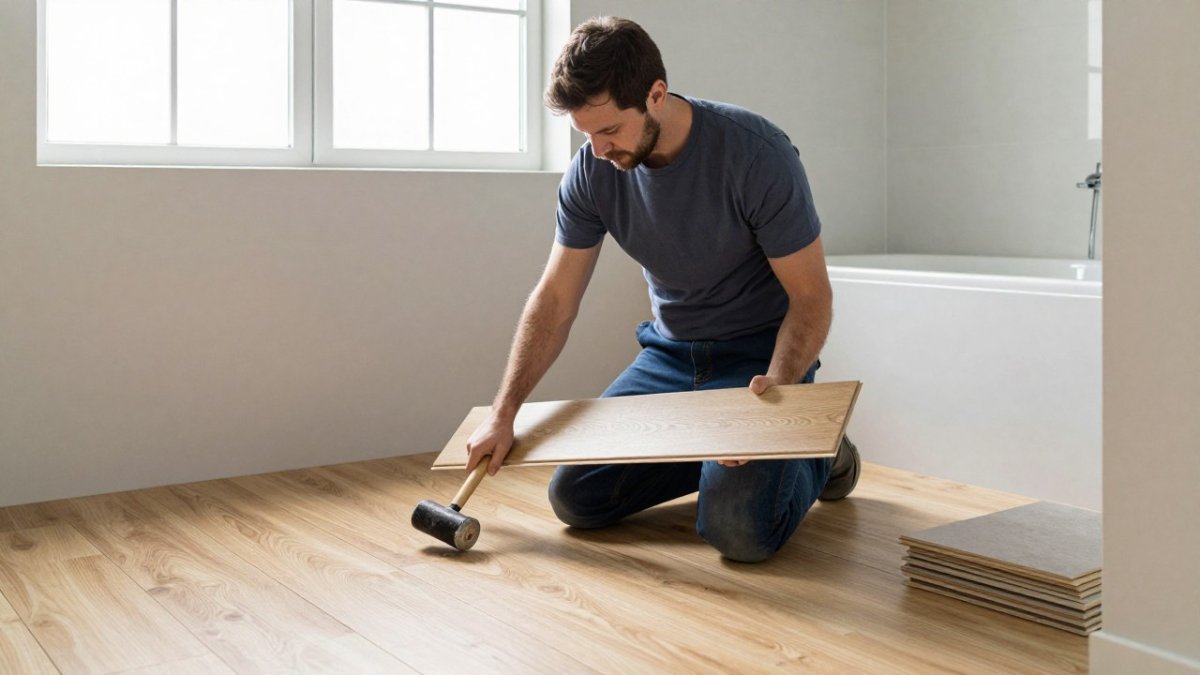
With luxury vinyl plank, the core is non-porous and the surface does not absorb water, but the assembly still has seams between planks, a perimeter gap at the walls, and transitions at the tub, shower threshold, and doorway. Plank seams are designed to click together tightly, yet they are not a waterproof barrier under standing water. A common failure is water that pools at a tub edge or a toilet flange and migrates under the planks through a seam or an unsealed perimeter gap, trapping moisture against the subfloor where it cannot dry.
Watch out: a waterproof plank laid over an unsealed subfloor with an open perimeter gap is not a waterproof floor. The planks will survive the water; the subfloor and the room below may not.
For a bathroom-specific comparison, match the assembly to the moisture scenario rather than to the material label. Everyday splashes and a damp bath mat are handled by either surface over a properly prepared subfloor. Standing water from a tub overflow or a shower that runs long enough to reach the perimeter is a different test, and it favors an assembly with a continuous membrane and sealed edges regardless of whether the surface is tile or vinyl.
ASTM International standards for flooring water performance
Tile Council of North America installation guidelines
Vinyl Flooring vs Tile Cost: Installed Price and Lifecycle Cost
Upfront price is the number homeowners compare first, but it is only one part of the total cost. The cost of a bathroom floor is the purchase price plus installation plus the cost of keeping it serviceable over its life, and those three parts move independently between vinyl and ceramic tile.
On purchase price, standard vinyl tile and sheet vinyl sit at the low end per square foot, luxury vinyl plank sits in the middle, and ceramic tile sits above them, with porcelain generally above ceramic. Pricing depends on product line, thickness, tile size, and region, so comparing quotes by specific product is more reliable than comparing by category.
Ceramic tile has a long service life and a surface that does not need replacing for wear, but it carries recurring costs: grout sealing on a schedule, grout repair where lines crack or stain, and localized tile replacement when a tile chips or a fixture leaks behind the wall. Matching a discontinued tile years later can be difficult, and replacing a single tile without damaging neighbors takes care. Vinyl plank has a shorter expected service life and a wear layer that can dull or scratch, but individual planks in a floating installation can often be replaced without tearing out the whole floor, and sheet vinyl can be patched. The trade-off is that vinyl is more likely to need full replacement sooner, while tile is more likely to need periodic repair and grout care over a longer horizon.
Repairability also affects the risk side of the ledger. A failed grout line or a cracked tile in a wet area can let water reach the substrate, and the repair cost includes finding and drying the moisture, not just replacing the surface. A failed plank seam or perimeter gap in a vinyl floor has a similar moisture path but a cheaper surface repair, provided the subfloor is dried before the new plank goes down. Neither material removes the need to fix the source of the water first.
Watch out: a low installed price that skips subfloor preparation or perimeter sealing is not a saving. It shifts cost into a future repair that is more expensive than doing the assembly correctly the first time.
Pricing depends on quantity, room layout, and product selection, so request a written quote for your specific bathroom. For current figures, contact My Kitchen Design EXPO for a quote.
Lowe's buying guide on vinyl tile vs ceramic tile
Porcelain vs Ceramic Tile for Bathroom Floor
Porcelain and ceramic are both tile, but they perform differently in wet rooms. Porcelain is denser and absorbs less water than ceramic, which makes it suited to areas with heavy moisture exposure. Ceramic is lighter and easier to cut.
National Tile Contractors Association tile guidance
Vinyl vs Tile Flooring Pros and Cons for Bathrooms
Vinyl flooring pros:
- Low water absorption and a non-porous surface
- Softer and warmer underfoot than tile
- Lower installed cost in many comparisons
Vinyl flooring cons:
- Performance depends on product quality and installation
- Can dent or scratch under heavy fixtures
- Some products have a limited heat tolerance
Ceramic tile pros:
- Long lifespan with proper grout care
- Wide range of colors, sizes, and textures
- Easy to clean and resistant to stains
Ceramic tile cons:
- Hard, cold, and unforgiving if dropped
- Grout lines need sealing and periodic repair
- Higher installed cost and more labor
Slip Resistance, Installation Quality and Long-Term Upkeep
Slip resistance is a safety issue in bathrooms, and it varies more by texture than by material. A textured or matte finish is generally preferred near tubs and showers. Glossy tile and smooth vinyl can both become slippery when wet.
Installation quality is a major factor in preventing failures. Uneven subfloors, missing underlayment, and poorly sealed transitions cause peeling, cracking, and water damage, regardless of the surface. Ongoing upkeep is simple: clean regularly, reseal grout if you choose tile, and check edges and transitions every year. U.S. Access Board guidance on accessible bathroom surfaces
Choosing Your Bathroom Floor and Booking a Consultation
For a full bathroom with heavy moisture, waterproof flooring installed over a sealed subfloor is usually the stronger choice. For guest baths and powder rooms, ceramic or porcelain tile remains a practical option. My Kitchen Design EXPO is a family-owned business serving Central Florida since 2009, offering turn-key construction and a one-stop shop for design and construction. Browse our bathroom vanity materials ranking to see which surfaces hold up best, or read our guide on whether professional bathroom design is worth the investment. Our team can also show you a 3D visualization of your bathroom before work begins, so you can see the design before construction. If you are planning a small master bath, see vanity styles that suit compact master baths before you choose. Book your in-store appointment today to get started.
Frequently Asked Questions
Which is better for a bathroom, luxury vinyl plank (LVP) or tile?
Both can work well in a bathroom, and the better choice depends on the install and the room. LVP is often less expensive installed than porcelain tile, though pricing depends on product, subfloor condition, and labor. Tile is harder and holds up to heat and scrubbing, but its grout lines need sealing. LVP is softer underfoot and quieter, but only the products rated for wet areas belong in a bathroom. Check the manufacturer's waterproof rating and the installation requirements for either option before you buy, and confirm that the product you choose has a verified waterproof specification.
Is ceramic tile waterproof?
Ceramic tile is water-resistant on its surface, but it is not fully waterproof. Ceramic absorbs more water than porcelain, which is why it is usually recommended for guest bathrooms and powder rooms where moisture exposure is moderate. The tile itself is rarely the point of failure. Water usually gets through failed grout, cracked caulk, or a damaged subfloor. Sealed grout lines and proper waterproofing help protect a bathroom floor more than the tile alone. Ask any contractor to explain how they will waterproof the whole floor system, not just the tile layer.
How much does vinyl flooring cost compared with tile?
Purchase price and installed price are different numbers, so compare both. Standard vinyl tile is typically less expensive per square foot than ceramic tile, according to the supplied Lowe's buying guide. Luxury vinyl tile can have a purchase price comparable to tile, so the savings are not guaranteed. Installed costs vary widely, so the most reliable figures come from a written quote for your specific bathroom. Pricing depends on material grade, subfloor condition, and labor, so request a written quote for your specific bathroom.
What are the downsides of ceramic tile flooring?
The main downsides of ceramic tile in a bathroom are water absorption, hard underfoot comfort, and the upkeep of grout. Ceramic absorbs more water than porcelain, so it depends more on a sealed, well-maintained grout and a correct waterproof underlayment. Tile is cold and hard, which can be tiring to stand on. Grout lines can stain, crack, or harbor mildew if they are not resealed. Tile is also heavy and brittle, so an uneven subfloor can crack it. Careful installation and periodic grout care prevent most of these problems.