 Comparison
What Flooring Holds Up Best in a Busy Kitchen?
Last Updated: October 26, 2026
Quick Summary
The best kitchen flooring materials for high traffic are porcelain tile, luxury vinyl plank, and luxury vinyl tile, because all three resist moisture at the surface and handle heavy foot traffic without showing wear. Porcelain is 20 to 30 percent harder than ceramic tile, while LVP is warmer underfoot and easier to spot-replace.
- Porcelain tile is fired at higher temperatures than ceramic and is 20 to 30 percent harder.
- Buy 5-10% extra tile at installation because grout color and shade can drift between lots.
- Sweep or vacuum daily in the busiest zones to remove grit that acts like sandpaper.
- The wear layer, not the pattern, is what fails first on vinyl flooring.
- Use appliance pads or coasters under heavy legs to protect laminate cores.
Table of Contents
- What Actually Matters in a High-Traffic Kitchen Floor
- Porcelain Tile vs Luxury Vinyl Plank: Which Wins in a Busy Kitchen?
- Best Waterproof Flooring for Kitchens That See Spills and Standing Water
- Natural Stone, Engineered Wood, and Laminate: Pros and Cons
- Slip Resistance, Repairability, and Lifecycle Cost: The Angles Most Guides Skip
- Kitchen Flooring Maintenance That Keeps Wear Resistance Intact
- Kitchen Flooring Cost: Upfront Price vs Long-Term Value
- Matching a Floor to Your Household and Booking a Design Visit
- Frequently Asked Questions
What Actually Matters in a High-Traffic Kitchen Floor
The best kitchen flooring materials for high traffic combine water, wear, and impact resistance without turning a spill into a permanent stain or a dropped pan into a permanent dent.
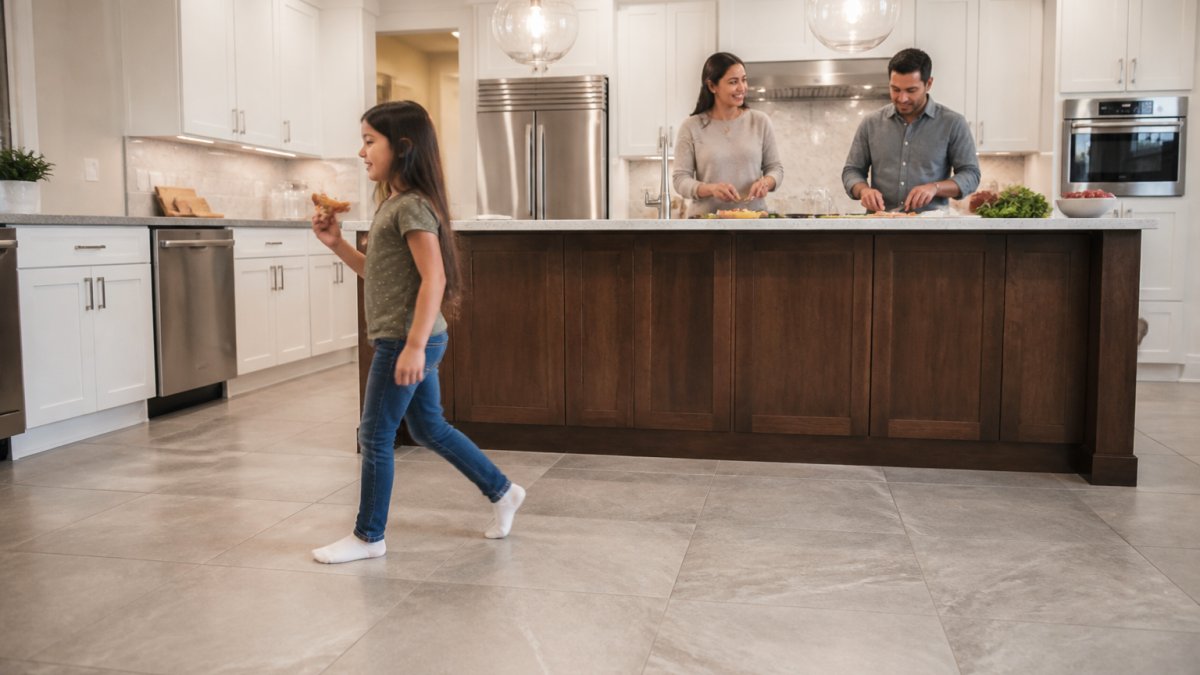
Most guides rank materials by looks or price per square foot, then treat durability as an afterthought. In practice, durability decides whether you replace that floor in five years or fifteen.
Four factors separate a floor that holds up from one that does not:
- Water and moisture resistance: how the material handles spills, standing water, and humidity
- Wear resistance: how the surface holds up against grit, chairs, and pets
- Impact resistance: whether a dropped object chips, dents, or cracks it
For a wider view of how surfaces work together in a busy space, our guide to countertop materials for busy family kitchens covers the same durability questions for the work surfaces above the floor.
Porcelain Tile vs Luxury Vinyl Plank: Which Wins in a Busy Kitchen?
Porcelain tile wins on hardness and water resistance; luxury vinyl plank wins on comfort, warmth, and easier repair. The right pick depends on whether you prioritize indestructibility or livability.
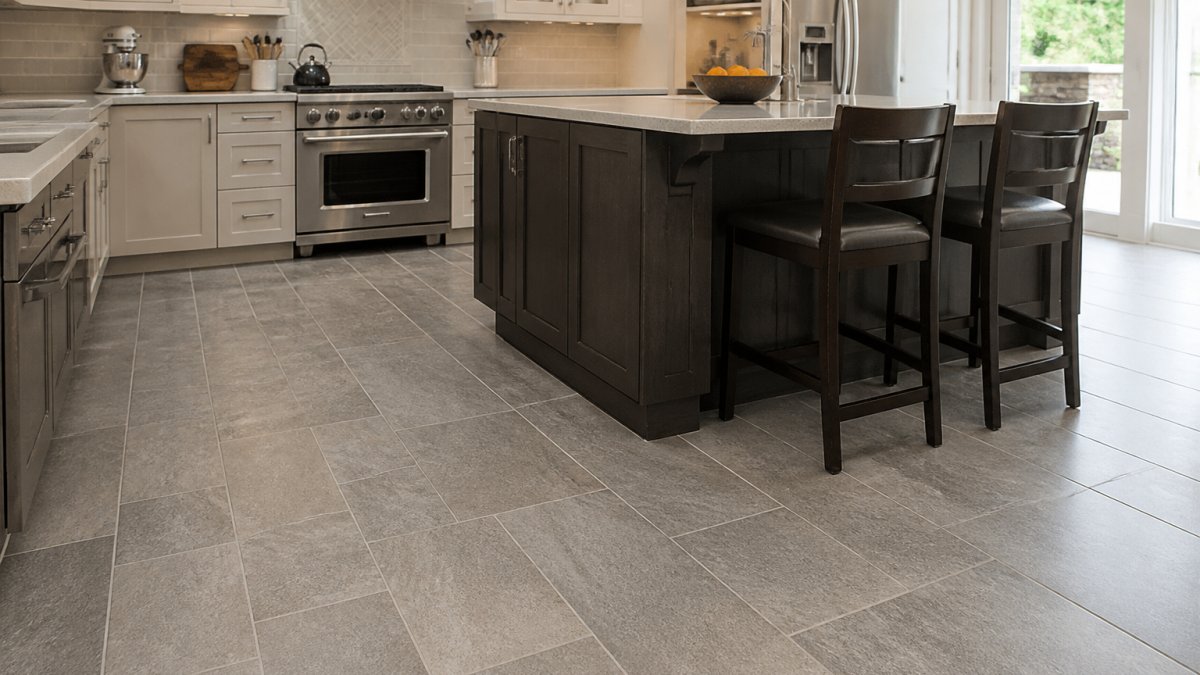
Porcelain tile is a dense, hard-fired ceramic tile with very low water absorption. According to Floor Coverings International's high-traffic flooring guide, porcelain is fired at higher temperatures than ceramic tile and is 20 to 30 percent harder, which is why it is recommended over ceramic for high-traffic areas.
Luxury vinyl plank (LVP) and luxury vinyl tile (LVT) are resilient flooring products with a printed design layer under a clear protective wear layer. Lowe's kitchen flooring ideas notes that LVT resists stains and scratches and handles heavy foot traffic without showing wear, and that it does not crack or chip the way real tile can.
The trade-off is simple:
- Porcelain is harder and more water-resistant, but cold underfoot and harder to repair if a single tile cracks
- LVP is warmer, quieter, and easier to spot-replace, but a deep gouge can expose the core
Best Waterproof Flooring for Kitchens That See Spills and Standing Water
Kitchens produce water in ways homeowners underestimate: a dishwasher leak that sits overnight, an ice maker line that drips behind the fridge, a bucket of mop water left too long.
Porcelain and ceramic tile are naturally water-resistant, and America's Floor Source's kitchen flooring overview lists ceramic tile as a durable, water-resistant option suited to high-traffic areas.
Watch out: "waterproof" on a label usually describes the core, not the seams.
Natural Stone, Engineered Wood, and Laminate: Pros and Cons
Natural stone and engineered wood deliver the best looks; laminate delivers the best value. All three demand more moisture discipline than tile or vinyl, and each fails differently when a kitchen gets busy.
Natural stone such as granite, slate, or travertine offers unmatched character and hardness, but it is porous unless sealed, cold underfoot, and expensive to repair. The kitchen-specific risks are chemistry and impact:
- Etching: acid-bearing spills, citrus, vinegar, wine, tomato sauce, dull polished marble, limestone, and travertine. Granite and slate tolerate acids better but still benefit from sealing.
- Staining: unsealed or worn sealer lets oil, grease, and colored liquids wick into the pores. A water-drop test on an inconspicuous spot tells you whether the sealer is still working: if the water darkens the stone instead of beading, it is time to reseal.
- Impact and point loads: a dropped cast-iron pan or a heavy appliance leg can chip or crack stone, and because stone is installed over a rigid substrate, a crack often telegraphs along the grout lines.
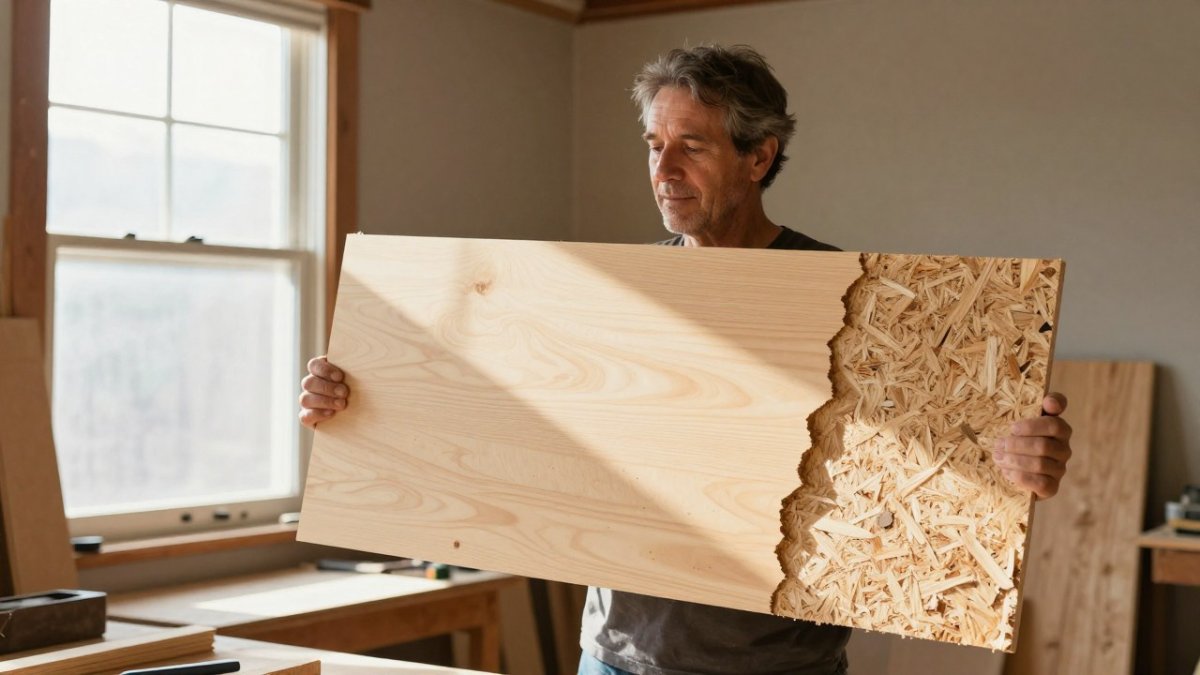
Engineered wood is a real wood veneer bonded to a plywood core, which makes it more dimensionally stable than solid hardwood and better at handling normal kitchen humidity swings. It still does not belong in a kitchen that sees standing water. The failure modes:
- Surface wear: the veneer is thin, often measured in fractions of an inch, so a deep gouge or a heavy sanding can burn through to the core. Once the veneer is gone, the plank cannot be refinished.
- Edge swelling: water that reaches the core through seams, appliance leaks, or a wet mop causes the plywood layers to swell and cup. Unlike a surface stain, cupping is not repairable.
- Refinishing limits: some engineered products can be lightly sanded and refinished once or twice; others cannot be refinished at all. Ask for the veneer thickness and the manufacturer's refinishing guidance before buying.
Laminate flooring is a photographic print under a wear layer on a fiberboard core. It resists scratches well and costs less than wood, but the core swells if water reaches it. The practical concerns:
Click and Make your "IN-STORE" appt today! →
- Seam vulnerability: the seams between planks are the weak point. A spill that sits on an unsealed seam can wick into the core and cause the edges to swell and lift, a defect that cannot be sanded out.
- Impact and point loads: laminate handles dropped utensils well but can chip at the edges, and heavy appliances on small feet can crush the core over time. Use appliance pads or coasters under heavy legs.
- Repairability: a damaged plank in a floating laminate floor can sometimes be replaced by disengaging the run, but a glued or click-locked floor in the middle of a room may require a visible patch.
| Material | Water Resistance | Wear Resistance | Impact Tolerance | Wet Traction | Typical Repair Approach |
|---|---|---|---|---|---|
| Natural stone | Good when sealed; reseal on schedule | Excellent | Chips and cracks under point loads | Honed/flamed better than polished | Replace individual stone; match dye lot |
| Engineered wood | Moderate; veneer resists, core does not | Good; veneer can be gouged | Dents under heavy point loads | Moderate; smooth finishes slick when wet | Spot-replace planks if veneer intact; refinish limited |
| Laminate | Moderate; core swells at seams | Good; resists scratches | Edges chip; core crushes under heavy feet | Moderate; textured finishes grip better | Replace plank if floating; patching visible |
For a wider view of how surfaces work together in a busy space, our guide to countertop materials for busy family kitchens covers the same durability questions for the work surfaces above the floor.
Slip Resistance, Repairability, and Lifecycle Cost: The Angles Most Guides Skip
Slip resistance and repairability decide long-term satisfaction more than any showroom sample. A floor that looks perfect but sends someone sliding across a wet kitchen is a failed floor.
Slip resistance when wet or greasy. Kitchen spills are water mixed with grease, soap, and food particles, which is slicker than water alone. Traction depends on surface texture more than material:
- Matte and textured finishes grip better wet than polished or honed-smooth finishes. A polished porcelain or polished stone floor can be dangerously slick with a thin film of grease.
- Grout lines and tile size affect traction. Smaller tiles with more grout lines provide more edges to catch a foot; large-format polished tile offers fewer interruptions.
- Ask about the wet coefficient of friction. Manufacturers publish slip-resistance ratings, and a common industry reference is the DCOF (dynamic coefficient of friction) value reported under the ANSI A326.3 test method. A higher wet DCOF indicates more slip resistance; ask the manufacturer for the tested value rather than relying on a "slip-resistant" label.
Repairability and localized damage. How a floor handles one damaged plank or tile separates materials that age gracefully from materials that force a full replacement:
- Porcelain and ceramic tile: a single cracked tile can be replaced if you keep spares from the same dye lot. The catch is that grout color and tile shade can drift between lots, so buy 5-10% extra at installation and store it.
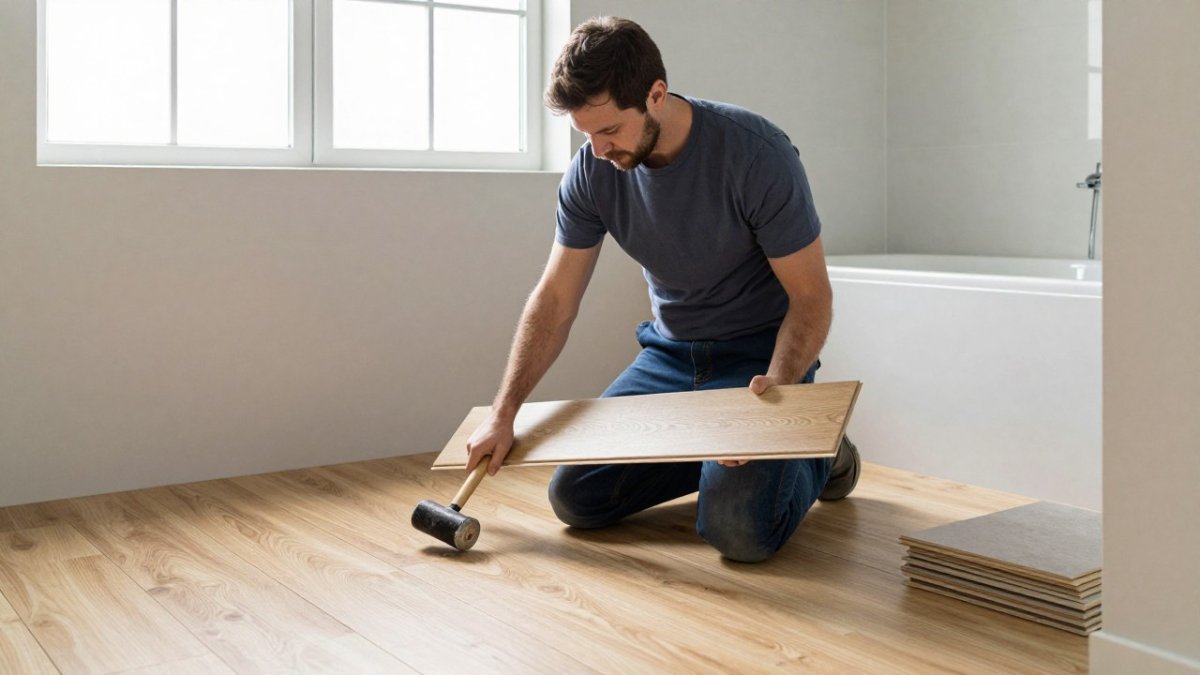
- Luxury vinyl plank in a floating installation: a damaged plank near a wall or the end of a run can often be disengaged and swapped. A plank in the middle of the floor is harder and may require a visible patch or partial re-lay.
- Glued-down vinyl and sheet vinyl: localized repair usually means cutting out a section and seaming in a patch, which can remain visible. Sheet vinyl damage near a seam is the hardest to hide.
Lifecycle cost and replacement economics. The sticker price per square foot is the least useful number in the decision. A cheaper floor that needs replacement twice costs more than a pricier floor installed once. Compare:
- Purchase and installation: material plus labor, underlayment, subfloor prep, and removal of the old floor.
- Routine maintenance: cleaning products, and for stone, sealer and resealing labor on the manufacturer's schedule.
- Repair reserve: the cost of replacing a percentage of planks or tiles over the floor's life, plus the labor premium for small jobs.
- Replacement interval: how many years before the material reaches the end of its service life in a busy kitchen.
Vinyl and laminate win on upfront price but may need earlier replacement in a hard-working kitchen, while porcelain and stone cost more to install but often outlast two rounds of cheaper flooring. Use the same square footage and labor assumptions for each option.
Kitchen Flooring Maintenance That Keeps Wear Resistance Intact
Kitchen flooring maintenance is mostly about protecting the wear layer and keeping grit off the surface. Small habits extend the lifespan of any material far more than occasional deep cleaning.
- Sweep or vacuum daily in the busiest zones to remove grit that acts like sandpaper
- Use a doormat at every kitchen entrance to trap debris before it spreads
- Clean spills promptly, especially on wood and laminate, where moisture is the enemy
What most guides miss is that the wear layer, not the pattern, is what fails first on vinyl. Once it dulls or scratches through, the printed design underneath starts to wear, and no polish fixes that.
Kitchen Flooring Cost: Upfront Price vs Long-Term Value
Kitchen flooring cost depends on material, square footage, subfloor condition, and installation method. Here is how to think about the trade-off.
Installation adds its own variables: tile requires a stable subfloor and more labor, floating plank floors go down faster, and moving appliances, removing old flooring, and leveling the subfloor all affect the final figure. For the wider budget, see our breakdown of kitchen remodel costs.
Matching a Floor to Your Household and Booking a Design Visit
The right floor for a household with three kids and a dog is not the right floor for a retired couple who cook lightly. Match the material to how the room is actually used, not to a photo online.
- Young kids and pets: porcelain tile or LVP for scratch and water resistance
- Frequent cooks who hate cold floors: LVP for warmth underfoot
- Households wanting a high-end look: sealed natural stone with a maintenance plan
Choosing kitchen flooring means balancing water resistance, wear, comfort, and repair costs against a budget that also has to cover cabinets and countertops. You can also review our kitchen design remodeling services before booking a visit. For the next step, see our kitchen renovation planning guide.
Frequently Asked Questions
What is the most durable flooring for a high-traffic kitchen?
Porcelain tile is the hardest-wearing option in most comparisons. Floor Coverings International notes porcelain is fired at higher temperatures than ceramic and is 20 to 30 percent harder, which is why it is recommended for high-traffic areas. Luxury vinyl tile is the practical runner-up: Lowe's describes LVT as resisting stains and scratches and withstanding heavy foot traffic without showing wear, and it will not crack or chip the way real tile can. For a kitchen with kids, pets, and daily cooking, those two cover most households well.
Is porcelain tile or luxury vinyl better for a busy kitchen?
It depends on what you want to protect against. Porcelain wins on hardness and scratch resistance, and it handles standing water without swelling. Luxury vinyl plank wins on comfort underfoot, quieter footsteps, and simpler repair of a single damaged plank. If your kitchen sees dropped pans and heavy chairs, porcelain holds up better. If you want warmth underfoot and a faster installation, vinyl plank is the more forgiving choice. Ask a designer to walk you through both in your actual layout before deciding.
What kitchen flooring is easiest to clean and maintain?
Tile and luxury vinyl are the simplest. Sweep or vacuum grit daily, damp mop with a pH-neutral cleaner, and avoid abrasive pads that dull the surface protection. Grout lines on tile need occasional scrubbing, so choose a mid-tone grout that hides stains. Vinyl needs no waxing and no sealing. Engineered wood and natural stone demand more: wood should be kept dry and re-coated periodically, and stone usually needs sealing to resist spills and staining.
How long does kitchen flooring typically last?
Lifespan tracks material and traffic. Porcelain and ceramic tile commonly last decades when the subfloor is sound and grout is maintained. Natural stone lasts just as long but needs resealing. Luxury vinyl typically lasts 10 to 20 years depending on the protective wear layer and how much grit is tracked in. Laminate sits in a similar range but is vulnerable to standing water at seams. Engineered wood can be refinished a limited number of times, which affects how long it stays looking new.