 blog
Cabinets To Go vs DLCabinetry: A 2026 Cabinet Comparison
Table of Contents
- Cabinets To Go vs DLCabinetry: The Short Answer
- Cabinets To Go vs DLCabinetry: Side-by-Side Comparison
- Cabinet Supplier Comparison Checklist
- Questions to Ask a Cabinet Supplier Before You Order
- How to Compare Kitchen Cabinet Quotes Line by Line
- Cabinet Installation and Delivery Timelines
- When a Turn-Key Cabinet and Remodel Partner Makes Sense
- Conclusion
- Frequently Asked Questions
Last Updated: October 21, 2026
Cabinets To Go vs DLCabinetry: The Short Answer
The choice between Cabinets To Go and DLCabinetry comes down to how much of the project you want to manage yourself. Cabinets To Go is a retail chain built around fast, in-stock cabinet buying, while DLCabinetry is a manufacturer and online seller that ships assembled or ready-to-assemble boxes directly to your door. Neither company installs your kitchen, measures your walls, or coordinates the plumber. That gap is where most homeowners get surprised.
At My Kitchen Design EXPO, we have spent years watching Central Florida homeowners buy cabinets online, then scramble to find someone to install them. The cabinet itself is rarely the problem. The missing plan is.
Below, we break down how cabinets to go retailers and direct manufacturers actually differ, what to ask before you sign, and how to read a quote so the cheapest number does not become the most expensive project.
Cabinets To Go vs DLCabinetry: Side-by-Side Comparison
Cabinets To Go operates physical showrooms where you can open doors, pull drawers, and walk out with in-stock options. DLCabinetry works more like a direct manufacturer: you order online, choose finishes and sizes, and the product ships to you. One sells convenience and speed. The other sells selection and price per box.
| Factor | Cabinets To Go | DLCabinetry |
|---|---|---|
| Buying model | Retail showroom and online | Direct manufacturer, online order |
| Assembly | Assembled options common | Assembled or ready-to-assemble |
| Lead time | Fast on in-stock lines | Varies by build and finish |
| Design help | In-store associates | Online order support |
| Installation | Not included | Not included |
| Best for | Buyers who want to see and touch | Buyers who know exact specs |
The honest trade-off: showroom buying gives you confidence and a fast timeline, while online manufacturing gives you more control over size and finish. Neither one measures your kitchen for you.
Cabinet Supplier Comparison Checklist
A cabinet supplier comparison checklist is a short list of the things that actually decide whether a cabinet purchase goes smoothly: accurate measurements, clear lead times, assembly status, delivery terms, and who handles problems after the sale. Run every supplier through the same list so the comparison is fair.
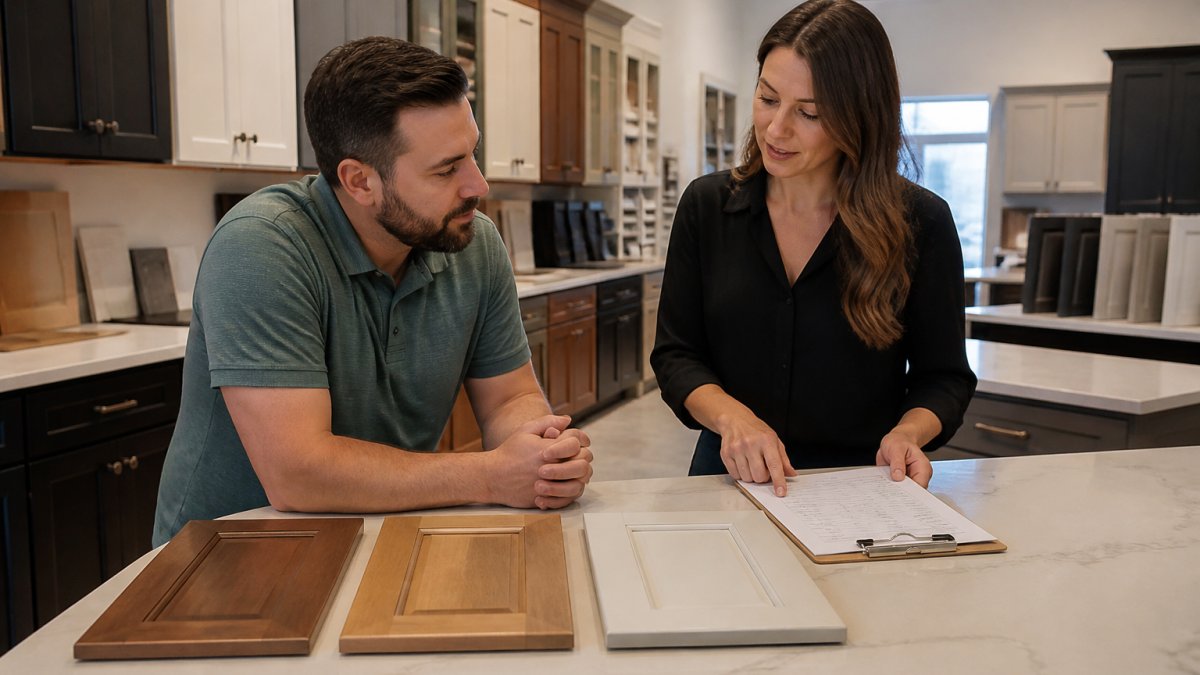
Use this checklist for Cabinets To Go, DLCabinetry, or any other supplier:
- Do they measure the space, or do you?
- Are cabinets assembled, RTA, or mixed?
- What is the real lead time, in writing?
- Who pays for delivery, and who handles damage?
- Are filler panels, toe kick, and trim included in the quote?
- What is the return policy on special-order finishes?
- Can they give you references from projects like yours?
Questions to Ask a Cabinet Supplier Before You Order
The questions to ask a cabinet supplier before you order should cover three things: what is included, what is not, and what happens when something goes wrong. Most buyer regret comes from the second category.
Specific questions worth asking:
- Is this price per cabinet or for the full layout?
- Does the quote include crown molding, light rail, and end panels?
- What happens if a door arrives damaged?
- Who is responsible for measuring, and is that in writing?
- Can I see the finish in person before I commit?
- What is the restocking fee if I change my mind?
A supplier who answers these clearly and in writing is usually a supplier who has done this before. Vague answers are a warning sign.
How to Compare Kitchen Cabinet Quotes Line by Line
Comparing kitchen cabinet quotes line by line means matching every item on one quote to the same item on the other. Start with the cabinet list, then work outward to trim, delivery, assembly, and installation.
Do this in order:
Click and Make your "IN-STORE" appt today! →
- Match cabinet counts and sizes first.
- Compare door style and finish grade.
- Check assembly status on both quotes.
- List every accessory line: fillers, panels, toe kick, molding.
- Add delivery and any freight charges.
- Add installation, or budget for it separately.
A quote that looks lower often just has fewer lines on it. The Federal Trade Commission's consumer guidance on home improvement contracts is worth reading before you sign anything, because it explains what a written contract should spell out.
Cabinet Installation and Delivery Timelines
Cabinet installation and delivery timelines depend on three things: whether the cabinets are in stock, whether they are assembled, and whether your installer is available when the boxes land. In-stock assembled cabinets can move in days. Special-order finishes commonly run several weeks. Installation itself is usually a short phase compared with the wait before it.
The mistake we see most: homeowners schedule the countertop template before the cabinets are actually set and level. That single sequencing error can stall a kitchen for weeks.
When a Turn-Key Cabinet and Remodel Partner Makes Sense
A turn-key cabinet and remodel partner makes sense when you want one company responsible for design, cabinets, countertops, and installation instead of coordinating four separate vendors. That is exactly the model we run at My Kitchen Design EXPO: a family-owned, one-stop shop serving Central Florida since 2009, with nearly 40 years of design experience behind the team.
What that changes in practice:
- You see the kitchen in 3D before anything is ordered, so finish and layout decisions happen on screen, not in your driveway.
- Cabinets, quartz or granite countertops, and installation sit under one contract.
- Measurements and sequencing are handled by the same team that installs.
If you enjoy project managing and know your exact specs, a direct manufacturer can work well. If you would rather not coordinate the trades, a turn-key partner removes that job from your plate.
Conclusion
The real decision is not Cabinets To Go versus DLCabinetry. It is whether you want to be the general contractor on your own kitchen. Buying boxes is the easy part; measuring, sequencing, and installing is where projects live or die.
If you want the design, cabinets, countertops, and installation handled by one team, My Kitchen Design EXPO offers 3D design visualization, a true one-stop shop, and turn-key construction from a family business that has served Central Florida since 2009. Click and make your in-store appointment today.
Frequently Asked Questions
How does DLCabinetry compare with Cabinets To Go?
DLCabinetry is an online cabinet seller that ships ready-to-assemble and assembled cabinets, while Cabinets To Go runs showrooms where you can see full cabinet lines in person and buy assembled or RTA units. Both compete on price and selection, so the deciding factors are whether you want to touch the finish before ordering, how long delivery takes to your address, and whether installation is included. Ask each supplier for a written quote with cabinet brand, box construction, and delivery dates so you compare the same scope.
Does Cabinets To Go offer assembled or ready-to-assemble cabinets?
Cabinets To Go sells both assembled and ready-to-assemble (RTA) cabinets across its product lines. Assembled cabinets arrive ready to hang, which shortens installation time but costs more per box. RTA cabinets ship flat and are put together on site, which lowers the cabinet price but adds labor hours. Ask which lines in your quote are assembled versus RTA, because mixing the two in one kitchen changes both the budget and the installation schedule.
What should I ask a cabinet supplier before placing an order?
Ask for the cabinet brand and box construction (plywood versus particleboard), the door material and finish warranty length, the exact delivery window, and who handles damaged or missing parts. Confirm whether the price includes assembly, delivery inside the home, and installation, or if those are separate line items. Also ask for two recent customer references with kitchens similar in size and layout to yours, and get the return policy in writing before you pay a deposit.
How can I compare cabinet quotes accurately?
Put every quote on the same scope: same cabinet lines, same door style, same accessories, same delivery and installation terms. Compare total project cost, not price per box, because a low cabinet price with paid assembly, delivery, and installation can end up higher than a quote that bundles them. Check the delivery and installation dates on each quote, and note which supplier provides design drawings or 3D renderings, since rework after a bad layout decision costs more than any per-box savings.