 blog
5 Custom Bathroom Vanity Design Trends for 2026
Table of Contents
- Floating Vanities and Modern Minimalism
- Custom Bathroom Vanity Ideas with Warm Wood Tones and Natural Materials
- Bathroom Vanity Colors 2026: Earthy Palettes and Warm Neutrals
- Bathroom Vanity Storage Ideas for Spa-Like Organization
- Layered Lighting and Statement Fixtures
- Custom Bathroom Vanity Cost and Budget Considerations
- Bringing Your Vision to Life with 3D Design
- Frequently Asked Questions
Last Updated: October 19, 2026
Floating Vanities and Modern Minimalism
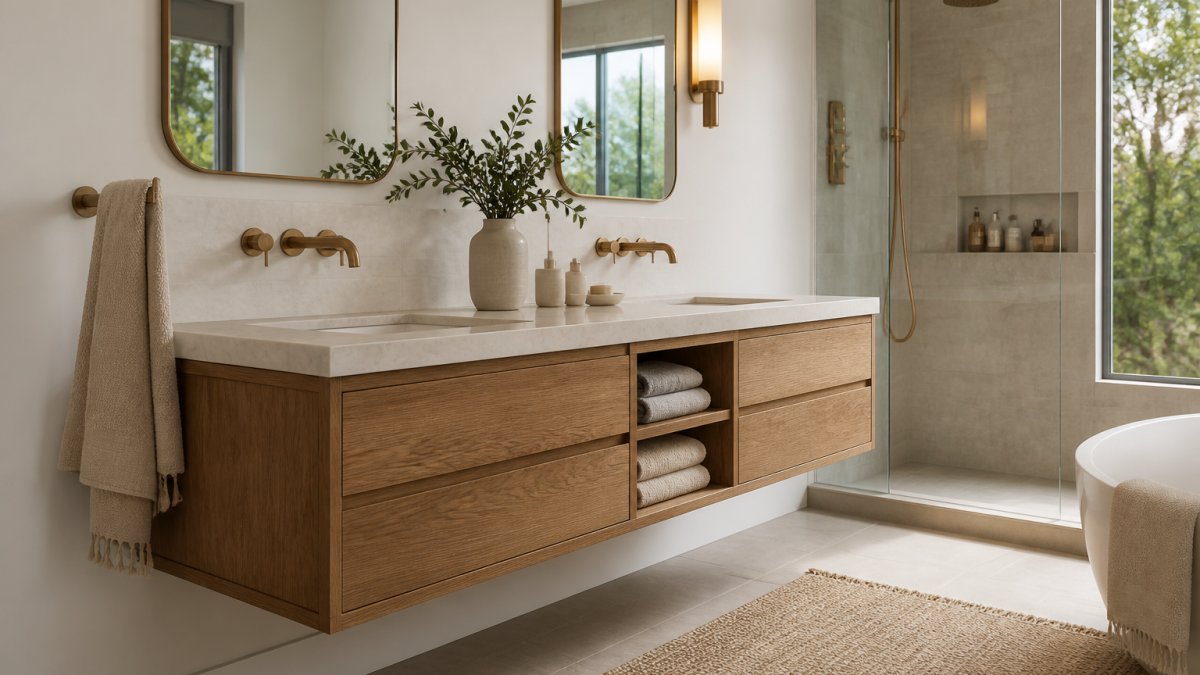
Floating vanities are dominating bathroom design in 2026. They create an open, airy feel that makes even small bathrooms feel larger. The wall-mounted design eliminates the visual bulk of a traditional pedestal or freestanding vanity.
A floating vanity works best when you have solid wall support. Your contractor needs to install a sturdy bracket system behind the drywall. This setup requires proper planning during the renovation phase.
The benefits are real and practical:
- Makes floor cleaning easier
- Creates storage space underneath for baskets or stools
- Gives your bathroom a modern, uncluttered look
- Works well in tight spaces
At My Kitchen Design EXPO, we've helped homeowners understand the structural requirements before committing to a floating design. Not all walls can support one safely. Our team uses 3D design visualization to show exactly how a floating vanity will look in your space before we start any construction work.
The vanity height matters too. Standard height is 30-36 inches from the floor. Taller homeowners might prefer 36-42 inches. Our design process accounts for your specific needs and ergonomics.
Custom Bathroom Vanity Ideas with Warm Wood Tones and Natural Materials
Warm wood tones are the trend that won't fade. Natural materials like walnut, oak, and reclaimed wood bring warmth into bathrooms that feel cold and sterile. These materials age beautifully and develop character over time.
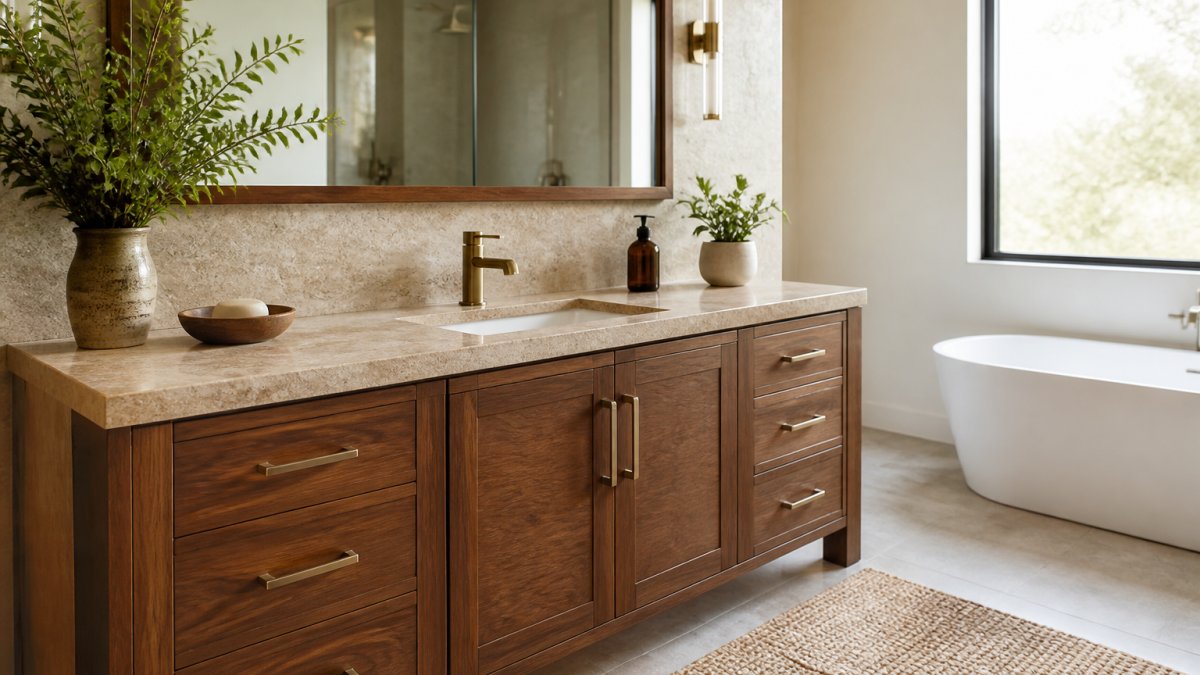
Stone finishes pair perfectly with wood. Marble, granite, and microcement countertops complement warm wood bases. The combination creates a spa-like feel that makes your daily routine feel luxurious.
Natural materials require honest maintenance:
- Wood needs sealing every 2-3 years
- Stone can stain if not sealed properly
- Microcement is durable but shows water spots
- Regular cleaning prevents buildup
The durability question comes up often. Solid wood vanities last 15-20 years with proper care. Engineered wood lasts 10-15 years. Real stone is nearly permanent but can chip or crack.
Custom vanities let you mix materials in ways mass-produced options cannot. You might combine a wood base with a stone top and integrate a concrete sink. This personalization is where custom design shines.
Bathroom Vanity Colors 2026: Earthy Palettes and Warm Neutrals
Earthy colors dominate 2026 bathroom design. Warm grays, soft greens, and muted terracotta create a calming environment. These colors work because they connect to nature and feel timeless rather than trendy.
The color palette extends beyond the vanity itself. Your wall color, tile, and accessories should work together. A cohesive look feels intentional and expensive.
Popular color combinations include:
- Warm gray vanity with cream tile and natural wood accents
- Soft sage green vanity with white subway tile
- Muted terracotta vanity with warm beige walls
- Warm taupe with brushed metal fixtures
Warm neutrals work in any bathroom size. Small bathrooms benefit from lighter shades that reflect light. Larger bathrooms can handle deeper, richer tones. The key is choosing colors that feel authentic to your home's overall style.
Consider your lighting carefully. Bathroom lighting affects how colors appear throughout the day. Warm white bulbs (2700K) enhance earthy tones. Cool white bulbs (4000K) can wash out warm colors. Layered lighting gives you flexibility.
Bathroom Vanity Storage Ideas for Spa-Like Organization
Storage transforms a bathroom from cluttered to calm, but the difference between storage that works and storage that annoys you is measured in inches. This section turns the 2026 spa-organization trend into buildable specifics: drawer depths, clearances, and adaptations for small rooms and aging-in-place needs.
Start with the ergonomic zones. A vanity has three reach zones, and storage should be assigned to match them:
- Primary zone (roughly counter height to shoulder height): daily items, toothbrush, skincare, medications, the items you touch every morning. This is where shallow drawers and divided top drawers earn their keep.
- Secondary zone (waist to counter height): items used weekly, hair tools, backup toiletries, cleaning supplies.
- Tertiary zone (below waist or above shoulder): seasonal or bulk storage, extra towels, bulk paper goods, travel kits.
Drawer and cabinet dimensions that actually work. A common pattern among cabinet makers is a top drawer around 4-6 inches deep for cosmetics and small toiletries, with deeper drawers below for towels and bulk items.
Clearances to plan around. Code and good practice both matter here. Most practitioners plan for roughly 30 inches of clear floor space in front of the vanity so doors and drawers can open without trapping you against a wall or fixture.
Small-bathroom adaptations. In a compact room, the 2026 floating vanity is the highest-leverage storage move because it frees the floor and makes the room read larger. Pair it with:
- A shallow-depth vanity (often around 18-21 inches deep instead of the standard 21-24) to preserve walking room.
- Wall-mounted or recessed medicine cabinets to move daily items off the countertop.
- Open shelving below the floating unit for baskets, which keeps bulky items visible and accessible without adding cabinet depth.
Aging-in-place and accessibility. If you have mobility concerns or plan to stay in the home long term, plan storage around reach rather than around aesthetics:
- Shallow drawers are easier to reach than deep ones, and drawers are easier to access than low cabinets with doors.
- Handles should be easy to grip, large pulls or D-handles rather than small knobs.
- Leave knee clearance below a sink if a seated user may ever need to use the vanity; that usually means a wall-mounted or floating design rather than a freestanding cabinet that blocks the floor.
- Avoid storing medications in high or hard-to-reach cabinets; a locked top drawer at counter height is both safer and easier to use.
Match storage to lifestyle. A busy parent needs different storage than someone who works from home. Ask questions about the daily routine before finalizing the layout: where does the hair dryer live, where do towels get stored, what has to be locked away.
Click and Make your "IN-STORE" appt today! →
My Kitchen Design EXPO incorporates accessibility and reach-zone planning into every custom vanity design, so the storage works for how you actually live rather than just how the showroom looks.
Layered Lighting and Statement Fixtures
Lighting makes or breaks a bathroom. Single overhead lights create harsh shadows and unflattering reflections. Layered lighting solves this problem with multiple light sources at different heights and intensities.
A complete lighting scheme includes:
- Vanity lighting on both sides of the mirror (task lighting)
- Overhead lighting for general illumination
- Accent lighting around the mirror or shelving (ambient)
- Dimmer switches for flexibility
Statement fixtures elevate the entire space. A sculptural pendant light or decorative sconce becomes a focal point. Brushed gold, matte black, and polished chrome finishes are trending. These fixtures work because they're functional and beautiful.
Mirror backlighting creates a spa atmosphere. Backlit mirrors provide soft ambient light while serving as a statement piece. They work especially well with minimalist vanities. The light draws attention upward and makes the space feel larger.
Hardware finishes should coordinate with your lighting. Warm brass pairs with warm-toned bulbs. Cool chrome works with bright white light. Mixing finishes intentionally creates visual interest. Random mixing looks unplanned.
Custom Bathroom Vanity Cost and Budget Considerations
Budget conversations matter, and vague answers waste everyone's time. Custom bathroom vanities cost more than stock options, but the investment only makes sense when you understand what drives the number.
Where the money goes. A custom vanity is really four purchases bundled together: the cabinet box and drawer fronts, the countertop and sink, the hardware and fixtures, and the installation labor. Each has its own cost range and its own levers.
- Cabinetry. The cabinet box and drawer fronts are usually the largest single line item. A painted or laminate-faced box sits at the low end; solid wood, veneer, and custom finishes sit at the high end. Drawer construction matters more than most homeowners expect, dovetail drawers with soft-close undermount slides cost more than stapled boxes with side-mount slides, and they last noticeably longer in a humid room.
- Countertop and sink. Laminate and solid-surface tops are the budget choice. Quartz and natural stone (marble, granite, soapstone) sit mid-to-high. An integrated or undermount sink adds fabrication labor because the cutout and edge profile have to be finished by hand. Vessel sinks look dramatic but raise the faucet height and can complicate the mirror placement.
- Hardware and fixtures. Pulls, knobs, and faucets are small line items individually but add up across a double vanity. Solid brass and designer finishes cost more than plated zinc; the difference shows up in finish durability in a wet room.
- Installation labor. Wall-mounted (floating) vanities require blocking and bracket work inside the wall, which adds labor compared with a freestanding unit that simply sits on the floor. Moving plumbing supply lines or the drain to accommodate a new sink position is a separate line item and one of the most common surprise costs.
What moves a quote up or down. A simple single-sink floating vanity with a painted box, laminate top, and basic pulls sits at the low end of the custom range.
Timeline affects cost. Rushing production adds cost. Planning ahead is one of the few levers that reliably saves money without cutting quality.
My Kitchen Design EXPO provides transparent, line-item pricing discussions so you understand what drives costs before you commit. Our 3D design process lets you see the final result before spending money on construction, which prevents expensive changes later.
Bringing Your Vision to Life with 3D Design
Seeing your custom bathroom vanity in 3D before construction begins changes everything. You catch design issues early. You confirm colors and materials work together. You make confident decisions.
3D visualization shows scale and proportion accurately. A floating vanity that looks good in photos might overwhelm your actual space. The design process reveals these issues before they become problems.
The visualization process includes:
- Measurements of your bathroom space
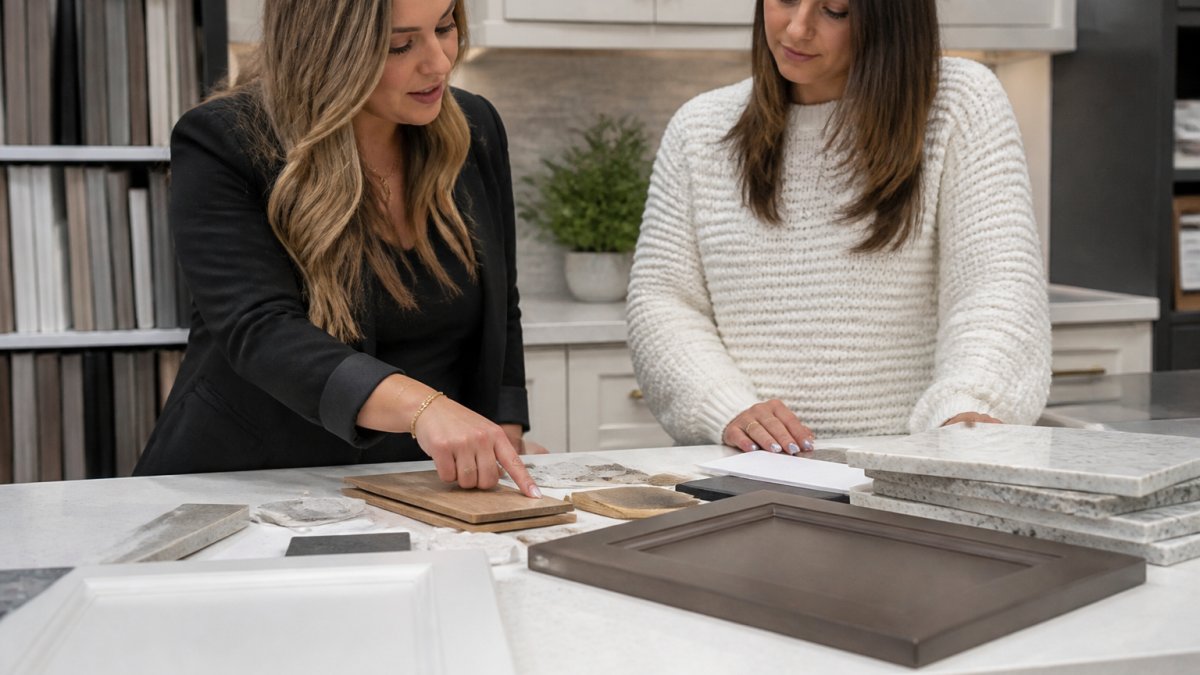
- Material samples and color selection
- Fixture and hardware choices
- Lighting placement and type
- Final design approval before construction starts
This is where My Kitchen Design EXPO's expertise shines. Our team has nearly 40 years of design experience. We've seen what works and what doesn't.
The one-stop-shop approach eliminates coordination headaches. You work with one team from design through installation. Communication stays clear. Timeline stays on track. Quality stays consistent.
Your custom bathroom vanity is an investment in your home's value and your daily quality of life. A well-designed vanity makes your bathroom feel like a personal retreat.
Ready to transform your bathroom with a custom vanity that reflects 2026's best design trends? My Kitchen Design EXPO brings expert design and seamless construction to your home.
Frequently Asked Questions
What color bathroom vanities are in style for 2026?
Warm wood tones, soft whites, warm grays, and earthy neutrals dominate 2026. These colors pair beautifully with natural materials like stone and microcement. Avoid cool grays and stark whites, the trend favors organic, inviting palettes inspired by nature. A custom bathroom vanity in these warm tones creates a spa-like atmosphere that feels both modern and timeless, making your bathroom a personal retreat.
Are floating bathroom vanities still in style in 2026?
Yes, floating vanities remain a top trend in 2026. They create visual lightness, make small bathrooms feel larger, and simplify cleaning. Floating designs pair well with minimalist aesthetics and work across styles from contemporary to Japandi. They also offer flexibility for future modifications. A custom floating vanity provides both function and the clean lines homeowners continue to favor.
What materials are popular for custom bathroom vanities in 2026?
Natural materials lead the trend: solid wood, marble, microcement, and stone finishes. These materials offer durability, moisture resistance, and authentic beauty that synthetic options can't match. Custom bathroom vanity designs increasingly blend materials, pairing warm wood bases with stone countertops, for example. Choose materials based on your bathroom's humidity level and your maintenance preferences; natural materials reward regular care with lasting appeal.
How much does a custom bathroom vanity cost?
Custom bathroom vanity costs depend on materials, size, storage complexity, and finishes. Budget ranges vary significantly based on whether you choose solid wood, stone countertops, integrated plumbing, and custom cabinetry. For an accurate quote tailored to your space and preferences, contact My Kitchen Design EXPO for a consultation and 3D visualization. Our team helps you understand the cost drivers and find solutions that match your budget and vision.