 How-to
Quartz Over Cabinets: What to Check Before Installing
Last Updated: November 11, 2026
Quick Summary
Yes, quartz countertops can often go over existing cabinets, but only when the cabinet base is sound, securely fastened, and level. Sagging, water-damaged, or loose cabinets will cause a new slab to crack or pull away over time, so inspect them before ordering.
- Check each cabinet run with a 4-foot level; a gap over about 1/8 inch signals a low spot.
- Confirm cabinets are screwed into wall studs, not just drywall, and clamped together.
- Soft, dark, or crumbling wood in cabinet floors or back panels needs repair before quartz goes on.
- Standard quartz slabs weigh roughly 15 to 20 pounds per square foot, so the cabinet frame must carry the load.
- Template the space after the old top is removed, because quartz cannot be adjusted on site.
Table of Contents
- Can You Install Quartz Countertops Over Existing Cabinets?
- Can You Replace Countertops Without Replacing Cabinets?
- Cabinet Inspection Checklist: Is Your Base Ready for Quartz?
- Do Quartz Countertops Sit Directly on Cabinets?
- Step-by-Step: How the Removal and Installation Process Works
- Quartz Overlay Countertops Cost: Pricing Factors and Timeline
- Can You Replace Countertops Without Damaging the Backsplash?
- Book Your In-Store Consultation to Check Your Cabinets
- Frequently Asked Questions
Quartz countertops can often go on top of existing cabinets, but only when the base is sound, secure, and level. If the cabinets sag, the boxes are water-damaged, or the joints have loosened, a new slab will crack or pull away over time.
Quartz is an engineered stone, usually made from roughly 90% ground quartz bound with resin. A typical slab is heavy, often 15 to 20 pounds per square foot at standard thickness, which makes the cabinet base the most important part of the job. National Kitchen and Bath Association guidance on countertop installation
Can You Install Quartz Countertops Over Existing Cabinets?
Yes, in many kitchens you can install quartz directly on existing base cabinets. The cabinets must be structurally sound, securely fastened to the wall and to each other, and level across the run.
When the cabinets fail any of those checks, the fix is repair or reinforcement before the new top goes on. Skipping that step can lead to a new quartz top cracking.
Can You Replace Countertops Without Replacing Cabinets?
Yes. Replacing only the countertop can be a cost-effective kitchen update. You keep the cabinet boxes, doors, and drawers, and you change the surface people see and use every day.
The trade-off is that you inherit the cabinets' condition. Old cabinets with water damage, loose joints, or uneven floors limit what you can do. A full cabinet replacement costs far more, so a good inspection first can save you money.
Cabinet Inspection Checklist: Is Your Base Ready for Quartz?
Walk through this checklist before you commit to a new top. Many of these checks can be done yourself with a level, a flashlight, and a screwdriver. The goal is not to certify the cabinets yourself but to catch problems early enough to price repairs before you order a slab.
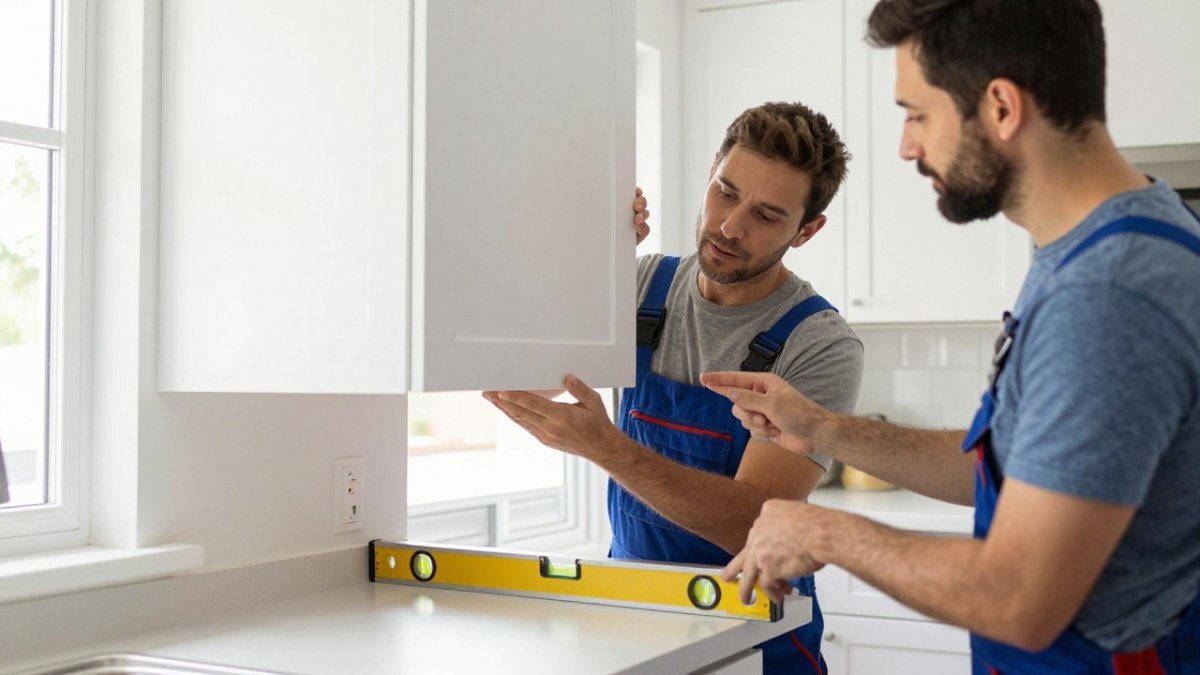
- Levelness: Set a 4-foot level along the top rail of each cabinet run, front to back and side to side. A gap larger than about 1/8 inch under either end of the level signals a low spot that will telegraph through the countertop and stress the seams. Note where the gap sits so the installer knows where to shim.
- Attachment: Confirm each cabinet is screwed into wall studs, not just drywall, and that adjacent boxes are clamped and screwed together. Gently push the front edge of each cabinet; movement means the fasteners have loosened or missed the studs.
- Structural condition: Open every door and pull every drawer. Look for sagging shelves, bowed sides, separated joints, and doors that no longer close evenly. A box that flexes under light hand pressure will not hold a quartz slab level for long.
- Water damage: Inspect the cabinet floor and back panel under the sink and beside the dishwasher. Soft, dark, swollen, or crumbling wood means that section needs repair or replacement before quartz goes on. Mold or a musty smell is a stop sign.
- Unsupported spans: Measure the clear span between supports on long runs, sink bases, and islands. Quartz is heavy, and a span without a center support or a continuous rail will flex.
- Clearances: Check that the cabinet tops are clear of old adhesive, tile thinset, or fasteners that would prevent the new slab from sitting flat.
Structural Condition and Weight-Bearing Capacity
Quartz is an engineered stone, usually made from roughly 90% ground quartz bound with resin.
Pay special attention to sink bases, islands, and long runs without a center support. A cabinet that has started to sag will not hold a quartz slab level for long, and the sag will show up as a crack at a seam or a gap at the wall.
Levelness, Attachment and Signs of Water Damage
Cabinets that are not level create uneven countertops and stress the seams. Shim the base where needed before the slab goes on, and recheck with the level after shimming. Confirm each cabinet is fastened to the wall studs, since loose cabinets shift when the slab is set and can pull the countertop away from the backsplash.
Water damage is the biggest warning sign. Check the cabinet floors and the back panels near the sink and dishwasher. Soft, dark, or crumbling wood means that section needs repair or replacement before quartz goes on.
Watch out: A cabinet that passes a visual check can still fail on levelness or attachment.
Do Quartz Countertops Sit Directly on Cabinets?
Yes, the slab usually sits directly on the cabinet frame, typically on a continuous rail or the top edge of the boxes. An adhesive or silicone bead can be used so the slab does not slide and so the joints stay tight.
Quartz is not usually supported by a plywood sheet alone. To compare it with the alternatives before committing, read quartz vs granite countertops for your kitchen. The cabinet structure must carry the weight, so the rails and frame matter more than the surface underneath.
Step-by-Step: How the Removal and Installation Process Works
If you are replacing an old countertop, the process follows a clear order. For tips on coordinating contractors during a partial renovation, see coordinating contractors for a partial kitchen renovation. Plan for the kitchen to be out of use for at least one to two days, and sometimes longer when plumbing needs work or when the fabricator's schedule is tight.
- Disconnect the sink and faucet. Shut off the water lines under the sink, disconnect the drain, and remove the faucet and disposal if they will be reused. A plumber or the installer usually handles this step.
- Protect the cabinets and floor. Lay down rosin paper or moving blankets over the cabinet tops and the floor along the work path. Old countertops are heavy and abrasive, and a dropped edge can dent a cabinet face or crack a tile floor.
- Remove the old countertop. Pull out any clips or screws holding it to the cabinets, cut the caulk line at the wall, and lift it off with help. Tile set in mortar can crack when pried, so careful removal matters.
- Inspect the exposed cabinet tops. Repair soft spots, add supports, and level the base. This is the last easy chance to fix problems before the slab is cut.
- Template the space. The fabricator measures the exact shape, including corners, the sink cutout, the cooktop, and any appliance clearances. Most fabricators use a physical template or a digital measurement system and confirm the sink and cooktop models at this visit.
- Fabricate the slab. Quartz is cut and polished at a shop after templating. Seams are placed at the shop, so tell the fabricator where you want them before cutting begins.
- Install the new top. Set the slab, check it is level, and secure it with adhesive or clips. The sink and cooktop can be set during the installation visit.
- Reconnect the sink and appliances. A plumber or the installer finishes the hookups, and the caulk at the wall and backsplash is finished last.
Quartz Overlay Versus Replacement on Existing Cabinets
Replacing a countertop on existing cabinets is not the same as installing a quartz overlay over an existing countertop. In a replacement, the old top comes off and the new slab sits directly on the cabinet frame.
Watch out: Templating happens after removal, not before. If you order a slab based on a pre-removal measurement, small differences in the cabinet tops can leave you with a countertop that does not fit, and quartz cannot be adjusted on site the way a wood or laminate top can.
The replacement process follows a clear order, from disconnecting the sink to reconnecting appliances.
| Step | What to do | Time or frequency |
|---|---|---|
| Disconnect sink and faucet | Shut off water, disconnect drain, remove faucet and disposal | Plan for 1-2 days out of use |
| Protect cabinets and floor | Lay rosin paper or moving blankets | Before removal begins |
| Remove old countertop | Cut caulk line, lift off with help | During demolition |
| Inspect exposed cabinet tops | Repair soft spots, add supports, level base | Last chance before slab is cut |
| Template the space | Measure corners, sink cutout, cooktop | After removal, before fabrication |
| Fabricate the slab | Cut and polish at shop, place seams | After templating |
| Install new top | Set slab, check level, secure with adhesive or clips | Installation visit |
| Reconnect sink and appliances | Finish plumbing hookups, caulk wall and backsplash | Last step |
Quartz Overlay Countertops Cost: Pricing Factors and Timeline
Pricing depends on the size of your kitchen, the material you choose, and whether cabinet repairs are needed. Pricing depends on the size of your project and its specific requirements. Please contact us for a quote.
For current prices and a timeline that fits your project, visit My Kitchen Design EXPO's website or schedule an in-store consultation. We will give you a quote based on your actual kitchen, not a guess. HomeAdvisor countertop installation cost guide
Can You Replace Countertops Without Damaging the Backsplash?
Often yes, but it depends on how the backsplash is attached. Tile set in mortar can crack when the old countertop is pried off, so careful removal matters. If the backsplash is glued directly to the wall, the old countertop may pull loose material with it.
Ask your installer how they plan to protect the backsplash before the job starts. Our guide on slab backsplash costs and trade-offs explains how a backsplash choice affects the job. Some will cut the top carefully and leave the wall tile in place. Others recommend removing a few tiles and reinstalling them.
Book Your In-Store Consultation to Check Your Cabinets
Your cabinets decide whether a quartz top is a good fit, and you should not guess. At My Kitchen Design EXPO, our team has nearly 40 years of design experience and can show your new kitchen in 3D before any work begins. Click and make your "IN-STORE" appointment today.
Frequently Asked Questions
Can you install quartz countertops over existing cabinets?
Yes, in most kitchens. Quartz is heavy, so the base cabinets must be structurally sound, securely fastened to the wall and floor, and reasonably level. A professional should check the cabinet boxes, face frames and support points before fabrication. If the boxes sag, have water damage or loose joints, they need repair or reinforcement first. Overhangs may need support so the stone does not crack under its own weight.
Can you replace countertops without replacing cabinets?
Yes. Replacing the countertop alone is a common approach when the cabinet boxes are in good condition. The old countertop is removed, the cabinets are checked and reinforced if needed, and the new quartz is templated, fabricated and set on the cabinet tops. This keeps cabinet costs out of the project and usually shortens the timeline. The sink, faucet and appliance connections are disconnected and reconnected during the process.
Do quartz countertops sit directly on cabinets?
Yes, quartz is typically set directly on the cabinet boxes, usually with a continuous support of plywood or a manufactured top and adhesive or clips. The cabinets must be level so the slab sits flat and seams line up. Wider runs and overhangs may need additional support brackets. Installers often check the cabinet tops for flatness before templating, since any high spot will show up as a gap or stress point in the finished stone.
Can you replace countertops without damaging the backsplash?
Often you can, but it depends on how the backsplash was installed. Tile set with mastic or thinset is more likely to crack when the old countertop is pried off, while a backsplash fastened only with adhesive to drywall may come loose. Protecting the wall, cutting the old top carefully and removing the backsplash only where needed reduces the risk. Discuss the backsplash plan during the in-store consultation so the install sequence accounts for it.