 blog
Trend-Driven vs. Timeless Kitchen Cabinet Styles
Table of Contents
- Why Kitchen Cabinet Style Matters for Long-Term Value
- Trend-Driven Cabinet Designs: What's Popular Now
- Timeless Kitchen Cabinet Styles That Don't Fade
- Kitchen Cabinet Quality Comparison: Construction That Lasts
- Cabinet Refacing vs. Replacement: Which Approach Fits Your Goals
- Kitchen Cabinet and Countertop Combinations That Work Together
- Questions to Ask a Kitchen Remodeler Before You Commit
- Making Your Decision: Balancing Style, Budget, and Durability
- Frequently Asked Questions
Last Updated: October 9, 2026
Why Kitchen Cabinet Style Matters for Long-Term Value
Your kitchen cabinet choice shapes far more than how your space looks today. It determines whether your investment holds its appeal in five years or feels dated by next spring. The best kitchen cabinet styles balance what's trending now with design elements that endure.
The stakes are real. A full kitchen renovation represents one of the largest investments most homeowners make. Choosing the wrong aesthetic direction means living with regret or facing expensive updates sooner than planned. Conversely, selecting kitchen cabinet styles that combine current appeal with timeless bones protects your investment and keeps your home feeling fresh for decades.
This matters because trends in kitchen cabinetry move fast. What looks modern in 2026 can feel tired by 2030. Yet purely timeless designs sometimes miss the mark by feeling sterile or outdated. The solution isn't choosing one extreme over the other, it's understanding what makes certain styles endure and which trend elements add genuine value versus temporary flash.
Trend-Driven Cabinet Designs: What's Popular Now
Today's trending kitchen cabinet styles emphasize bold colors, mixed materials, and statement hardware. Deep blues, forest greens, and warm blacks dominate high-end renovations. Many homeowners pair these rich cabinet colors with natural wood accents, creating visual contrast that feels intentional rather than mismatched.
Open shelving remains popular, though the trend is evolving. Rather than replacing all upper cabinets with shelves, designers now mix closed storage with selective open display. This hybrid approach gives you the airy feel of open shelving without sacrificing storage or forcing you to keep everything display-ready.
Hardware has become a design focal point. Instead of blending in, cabinet hardware now makes a statement. Brass pulls, leather straps, and oversized handles in matte finishes are everywhere.
Mixed materials represent another strong trend. Combining wood cabinets with glass-front doors, metal accents, or even concrete-textured finishes creates visual interest. This approach appeals because it feels custom and intentional, even when using stock or semi-custom cabinetry options.
The risk with trend-driven choices is obvious: what feels fresh today may feel forced in a few years. The homeowners who've stayed happiest with bold cabinet colors are those who genuinely love the color itself, not those who chose it because it was trending.
Timeless Kitchen Cabinet Styles That Don't Fade
Timeless kitchen cabinet styles rest on principles that transcend trends: clean lines, quality construction, and neutral palettes that serve as a backdrop rather than the main event.
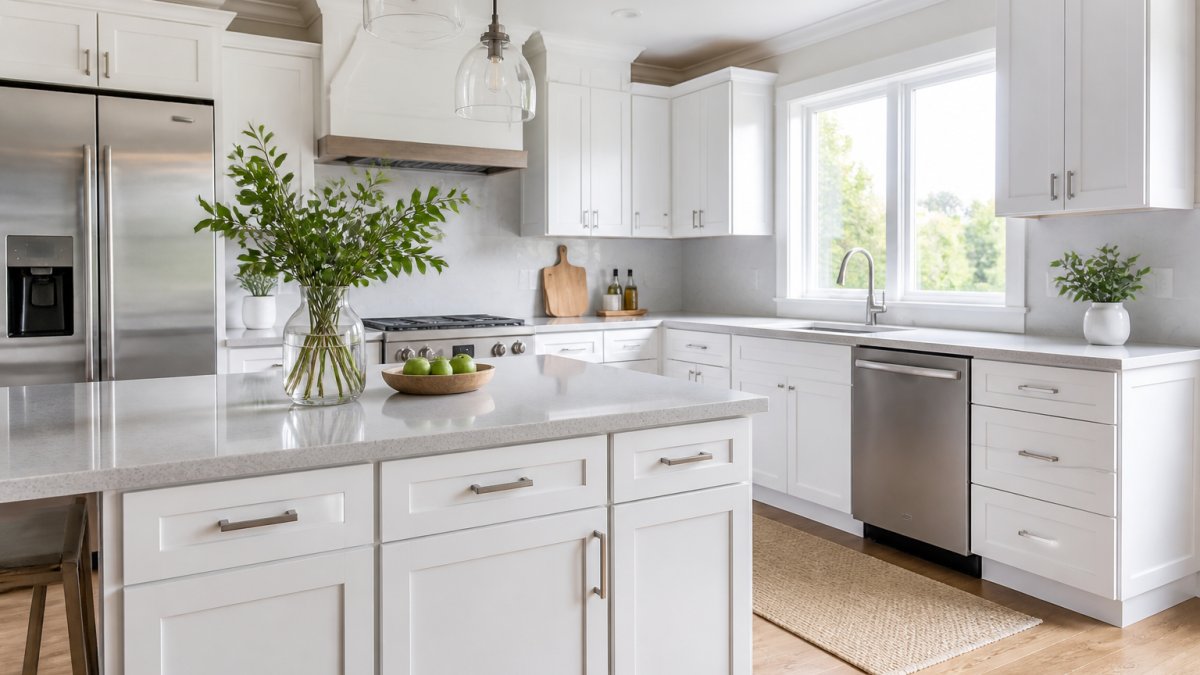
White and cream cabinetry remains the most reliably timeless choice. These colors have dominated for decades because they work with any countertop, backsplash, or décor style. They make spaces feel larger and brighter.
Natural wood cabinets in warm tones (cherry, oak, maple) represent another enduring style. These work because they complement rather than compete. The wood grain itself provides visual interest without relying on color trends.
Shaker-style cabinet doors define timeless design. The simple five-piece door with a flat center panel and recessed frame has remained popular for over a century. It's not flashy, but it's elegant.
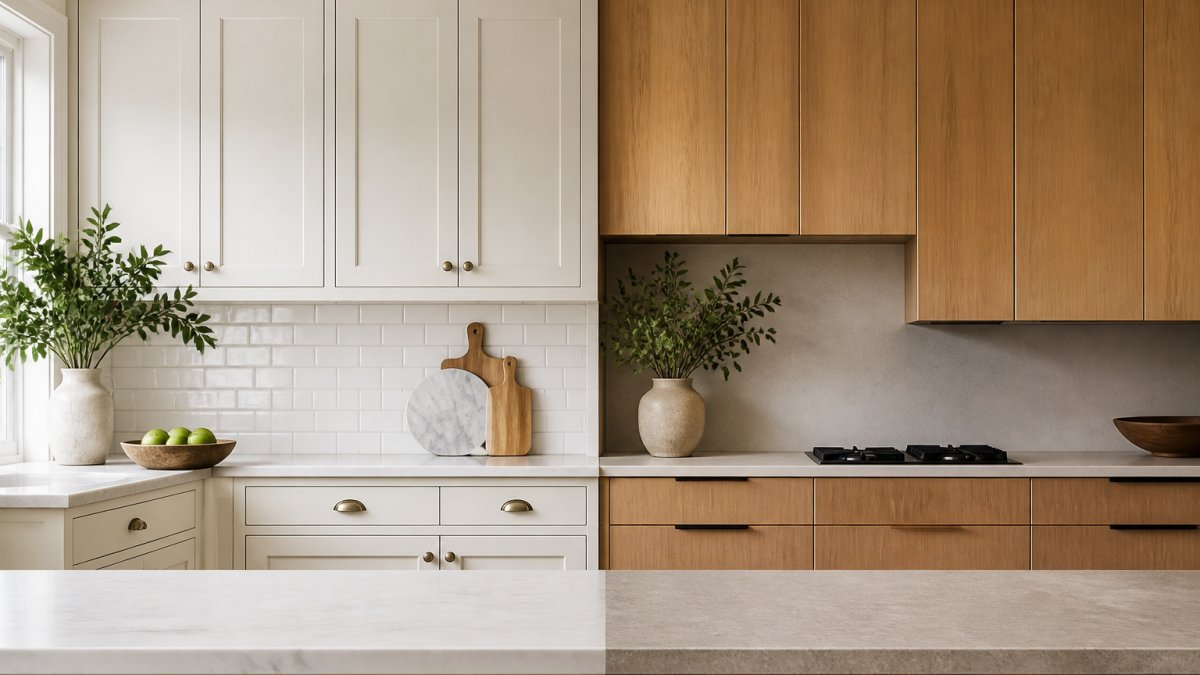
Two-tone cabinetry, typically pairing white uppers with a deeper wood or painted lower cabinet, sits in the middle ground. This approach adds visual interest without committing fully to bold color.
The hardware on timeless cabinets stays subtle. Simple bar pulls, cup pulls, or even recessed handles let the cabinet construction shine. When hardware is understated, the focus lands on quality joinery and finish durability.
Kitchen Cabinet Quality Comparison: Construction That Lasts
Cabinet construction quality determines longevity far more than style. Two kitchens with identical aesthetics will age very differently based on how the cabinets are built.
Start with the cabinet box itself. All-wood construction with dovetail drawer boxes represents the gold standard. Dovetail joints create mechanical strength that outlasts glued connections. Plywood box construction offers solid durability at a lower price point.
Drawer slides matter more than most homeowners realize. Full-extension slides that open completely make cabinets more functional and are easier to clean. Soft-close mechanisms prevent slamming and extend hardware life. Budget options use basic roller slides that wear faster and don't close smoothly over time.
Hinges determine how cabinet doors perform after years of opening and closing. Soft-close hinges cost more upfront but prevent the wear that comes from repeated slamming. Quality hinges hold adjustment longer, meaning doors stay aligned and don't sag.
Finish durability separates cabinets that look great for a decade from those that show wear within three years. Conversion varnish and polyurethane finishes resist moisture and daily wear better than lacquer. The finish thickness matters, multiple coats provide better protection than single-coat applications.
Interior organization affects perceived quality and functionality. Adjustable shelving, pull-out organizers, and dividers add cost but make cabinets work harder for you. These features don't affect style but dramatically improve long-term satisfaction.
Construction Element | Budget Option | Mid-Range | Premium |
|---|---|---|---|
Cabinet box | Particleboard | Plywood | All-wood |
Drawer box | Stapled | Dovetail joints | Dovetail, reinforced |
Drawer slides | Basic roller | Ball-bearing | Full-extension soft-close |
Hinges | Standard | Soft-close | Adjustable soft-close |
Finish | Single coat lacquer | Multi-coat conversion varnish | Polyurethane, multiple coats |
Hardware | Basic pulls | Quality pulls | Designer-grade hardware |
Cabinet Refacing vs. Replacement: Which Approach Fits Your Goals
Cabinet refacing and full replacement serve different situations. Understanding which fits your kitchen saves money and prevents costly mistakes.
Cabinet refacing keeps existing cabinet boxes and replaces doors, drawer fronts, and hardware. This approach works when your current cabinets are structurally sound but aesthetically tired. Refacing costs less than full replacement. The timeline is faster, typically one to two weeks versus several weeks for replacement.
The limitation: you're locked into your current cabinet layout. If your kitchen needs better storage, different cabinet heights, or repositioned appliances, refacing won't address these. Refacing also depends on the condition of existing boxes.
Full replacement removes all cabinetry and installs new boxes, doors, and hardware. This approach lets you redesign your kitchen layout, add specialized storage, and improve functionality. You get to choose construction quality and materials from the ground up.
Full replacement makes sense when you want to improve kitchen function, when existing cabinets show structural damage, or when you're ready to commit to a complete aesthetic overhaul. It's the better long-term investment if your kitchen layout isn't working for your lifestyle.
For many homeowners, the decision hinges on budget and timeline. Refacing works if your cabinets are structurally sound and your layout already serves you well. Replacement is worth the investment if you need functional improvements or if existing cabinets show signs of failing.
Click and Make your "IN-STORE" appt today! →
Kitchen Cabinet and Countertop Combinations That Work Together
Your cabinet choice doesn't exist in isolation. Countertops, backsplash, and hardware must work as a cohesive system, or even excellent cabinetry looks disconnected.
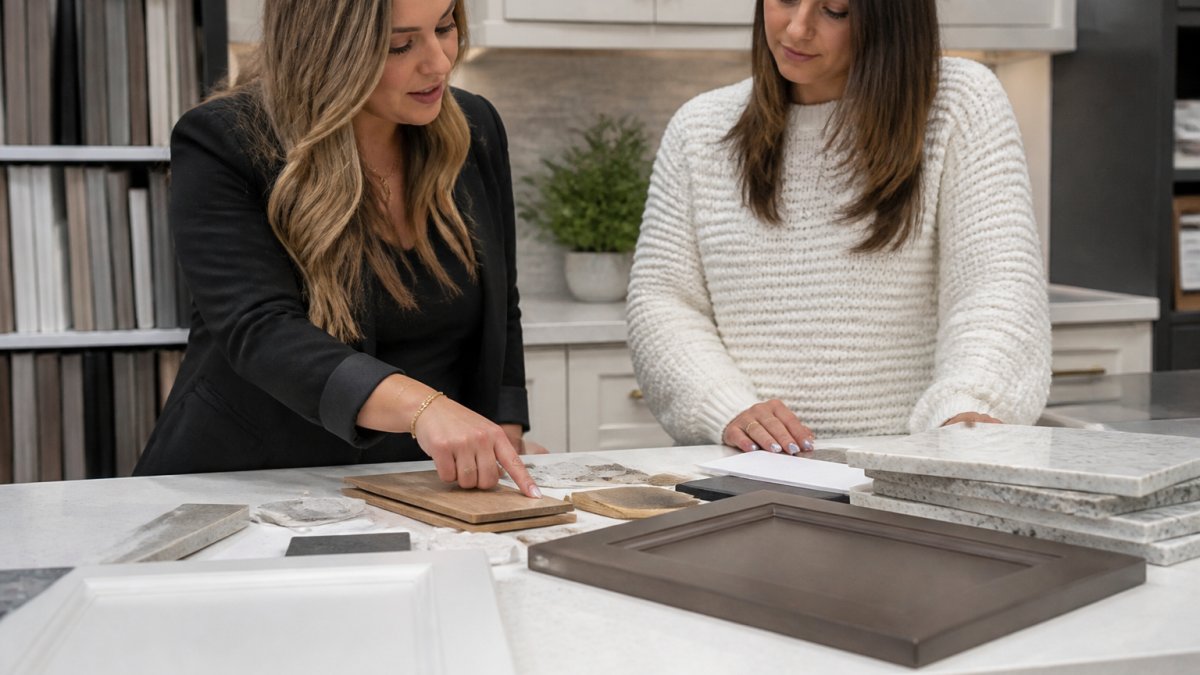
White or cream cabinetry pairs beautifully with almost any countertop. Light quartz, granite with subtle movement, or even concrete-look surfaces work seamlessly. The neutral cabinet backdrop lets your countertop become the design statement.
Natural wood cabinets call for countertops that either complement or contrast intentionally. Warm granite with honey tones echoes the wood. Cooler quartz or marble creates deliberate contrast. Avoid countertops that compete, a busy granite pattern on wood cabinets creates visual chaos.
Two-tone cabinetry needs countertops that bridge both colors. A light gray quartz works with white uppers and darker lowers. Warm cream granite complements both white and natural wood tones. The countertop should feel like it belongs to both cabinet colors, not favor one over the other.
Hardware ties everything together. Brass hardware warms the space and works with natural wood or cream cabinetry. Matte black hardware feels modern and pairs well with bold cabinet colors. Stainless steel offers neutrality but can feel cold if not balanced with warm countertop tones.
Backsplash completes the picture. Subway tile remains timeless and works with any cabinet style. Larger format tiles feel more contemporary. Patterned tile should echo colors already present, from cabinetry or countertops, rather than introduce new colors.
Questions to Ask a Kitchen Remodeler Before You Commit
Before signing a contract, clarify these critical points with your remodeler. The answers reveal whether they understand your project and can deliver what you envision.
Ask about their design process. Do they use 3D visualization? Can you see your kitchen before construction starts?
Clarify the timeline. When does work start? How long will your kitchen be disrupted? What happens if materials are delayed? A realistic timeline accounts for lead times on custom cabinetry, delivery, and installation sequencing.
Discuss budget. What's included in the quoted price? Are there common add-ons that typically increase costs? What happens if you discover issues during demolition? Understanding the budget structure prevents sticker shock later.
Ask about warranty and guarantees. What's covered? For how long? What's the process if something fails? A reputable remodeler stands behind their work with clear warranty terms.
Inquire about their experience with your specific cabinet style and material choices. Have they installed the cabinet line you're considering? Can they show examples of similar projects?
Ask how they handle the one-stop-shop experience. Do they manage all trades, cabinetry, countertops, plumbing, electrical? Or will you coordinate multiple contractors? My Kitchen Design EXPO manages the entire project.
Request references from recent projects similar to yours. Talk to actual customers about timeline, budget adherence, and satisfaction. Ask whether the final result matched the design vision.
Making Your Decision: Balancing Style, Budget, and Durability
The best kitchen cabinet choice aligns three factors: your aesthetic preferences, your budget, and your timeline.
Start with honest self-assessment about style. Are you drawn to current trends because they genuinely excite you, or because they're everywhere? If a trend disappears, will you still love your cabinets?
Budget determines what's possible. If you're refacing, you're limited to existing layouts but can dramatically refresh appearance. If you're replacing, you can redesign for better function but invest more.
Timeline matters practically. Refacing takes weeks. Stock cabinetry has shorter lead times than semi-custom options. Custom cabinetry can take months. If you need your kitchen functional quickly, stock or semi-custom options work better than custom builds.
The most satisfied homeowners chose cabinets they genuinely loved, not cabinets they felt obligated to choose. They understood their budget realistically and didn't stretch beyond comfort. They prioritized construction quality because they understood that appearance fades but durability lasts.
Your kitchen cabinet decision shapes your home's functionality and appeal for years.
Choosing the right kitchen cabinets involves balancing immediate appeal with lasting value. My Kitchen Design EXPO helps you navigate these decisions with 3D virtual modeling that shows exactly how your kitchen will look before construction begins.
Frequently Asked Questions
What makes a kitchen cabinet style timeless versus trendy?
Timeless kitchen cabinet styles rely on clean lines, neutral colors, and proven materials like all-wood construction or quality plywood box construction. Trend-driven designs often feature bold colors, unusual hardware, or specific finishes that peak in popularity then fade. Timeless cabinets maintain their aesthetic appeal for longer, while trendy styles may feel dated sooner. The key difference: timeless designs are based on fundamental design principles, while trends respond to what's fashionable in a specific moment.
Should I choose cabinet refacing or replacement if I want a style update?
Cabinet refacing works best if your cabinet box structure and layout still serve your needs—you're only updating the exterior appearance. Replacement is ideal when you want to change the kitchen layout, upgrade to better construction quality (like dovetail drawer boxes or soft-close hinges), or improve functionality. Refacing costs less upfront but offers limited style options. Full replacement gives you complete control over kitchen remodeling goals, material durability, and long-term value. Consider your timeline and budget.
What questions should I ask a kitchen remodeler about cabinet quality?
Ask about box construction: are they using plywood or MDF? Request details on drawer box construction—dovetail joints indicate better durability than stapled boxes. Inquire about hinge quality and whether soft-close mechanisms are included. Ask about finish durability and moisture resistance, especially for kitchens prone to humidity. Request references from completed projects and ask about warranty coverage on cabinets and installation. Finally, ask how they handle custom modifications and what their timeline looks like. A reputable remodeler will answer these questions thoroughly and provide documentation.
How do kitchen cabinet and countertop combinations affect the overall design?
Your cabinet finish, color, and style should coordinate with countertop material and color to create visual balance. Dark wood cabinets pair well with lighter countertops like white quartz or granite to prevent the kitchen from feeling closed-in. Light or white cabinets work with both bold and subtle countertop choices. The hardware finish, backsplash, and flooring should also tie into this combination. A cohesive kitchen cabinet and countertop pairing enhances both aesthetic longevity and home value appreciation. Professional designers use 3D visualization to show how these elements work together before construction begins.